The Tide Between Our Lines
Page 133 of 216
Chapters
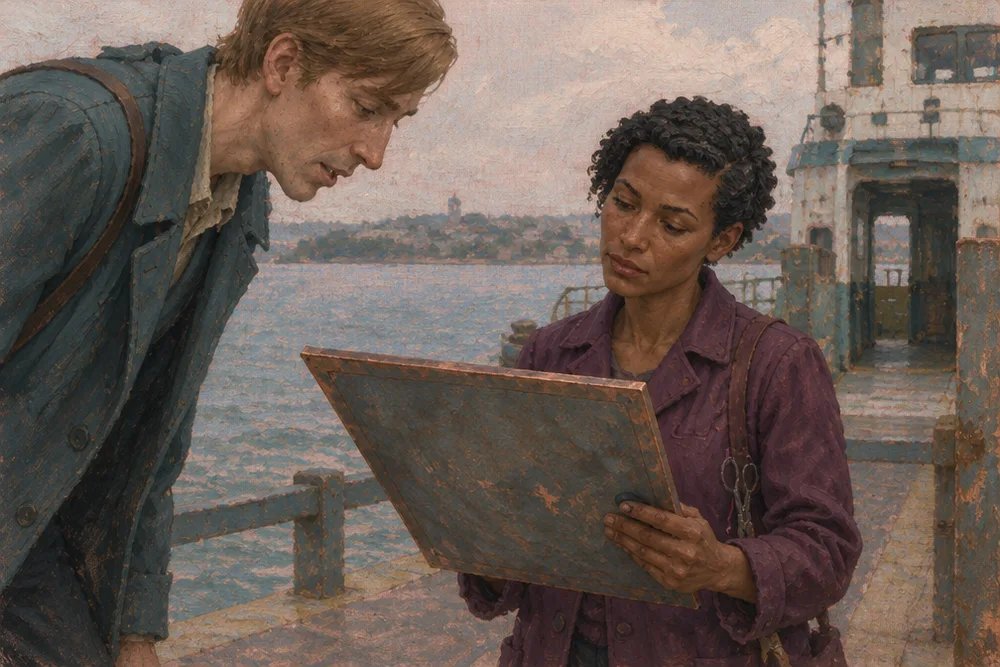
“You moved the public boundary,” he said.
“Only enough to make the sections legible. The line ends where the sound public stretch ends.”
“Good.” His eyes went to the status panel. “This is better.” He read the sentence beneath the date once, then again. “But ‘confirm conditions at the crossing’ still sounds like they can confirm it before they get there.”
“That’s why I’ve changed it to ‘check.’ I’m not sure ‘check’ is honest either.”
Gethin looked over toward the tide-marked landing. “It’s honest if it tells them what the sheet cannot do. A notice can tell you what was seen. It can’t tell you what the water’s doing right now.”
“So: ‘This sheet does not predict tide or landing wash. Check the crossing before use.’”
He considered the words. “Better. But some people won’t have a way to check from the shore.” His mouth tightened. “That’s not a reason to hide it from them. It’s a reason not to call the route safe.”
The ferry bell sounded once, and he glanced toward his boat. Xanthe watched him make the choice: finish reading, or answer the call. He turned back to the proof. “The private doorstep’s marked separately?”
“Yes. Not as the public path.”
“Then I can sign the editorial agreement after this wording is final. Not before.”
“I don’t want you signing a thing you haven’t approved.” She kept her voice even. “I’ll bring you the next proof.”
He gave her the ticket punch back; she had picked it up when he set it on the rail. Their fingers met briefly around the square metal. Then the passenger with the basket called his name, and Gethin stepped away to help her aboard. Xanthe stood by the landing with the proof in her hands, feeling both the weight of his condition and the care in its precision.
Back at the press she wrote his words into the panel. The line became longer. The type had to grow larger. The map had to surrender another margin.
By afternoon, the layout was no longer a map with a border. It was a map with room to breathe where people needed to read. Xanthe removed the fine decorative rule, then the pale ornamental wash around the harbor name. She kept the water texture where it clarified the edge of land, and cut it where it merely made the sheet look finished.