The Things We Called Scrap
Page 89 of 208
Chapters
“You wouldn’t. A proposal can be conditional and itemized. First we need a proper account, including any payment the old owner received but didn’t post. Then we can decide whether installments make sense.”
Ruth rested the pencil against the notebook’s spine. “I can pay something if there’s something left. I can’t pay a made-up number just to be done with it.”
“That’s reasonable,” Leah said. “I’ll prepare a version that says no agreement until the account is reconciled.”
Fern looked at Ruth. “You don’t have to settle because I signed a slip.”
“I’m not doing it for you.” Ruth’s answer came without a pause. “I’m doing it because I want the matter finite. Those aren’t the same thing.”
The bluntness left Fern with no useful reply. She lowered her eyes to her hands. One thumbnail was ridged where she had worried it against the paper sleeve. She’d spent days trying to be useful to people whose rent records had been hidden inside a dead machine. Sometimes useful meant carrying a box. Sometimes it meant not placing her certainty over somebody else’s account.
Ruth authorized Leah to request the dental date and to prepare the fallback proposal. She did not authorize Fern to speak for her. Leah marked that distinction on the intake sheet and asked Ruth to read the wording before signing. Ruth read every line, corrected the spelling of the building’s old owner, and pressed her initials beside the change.
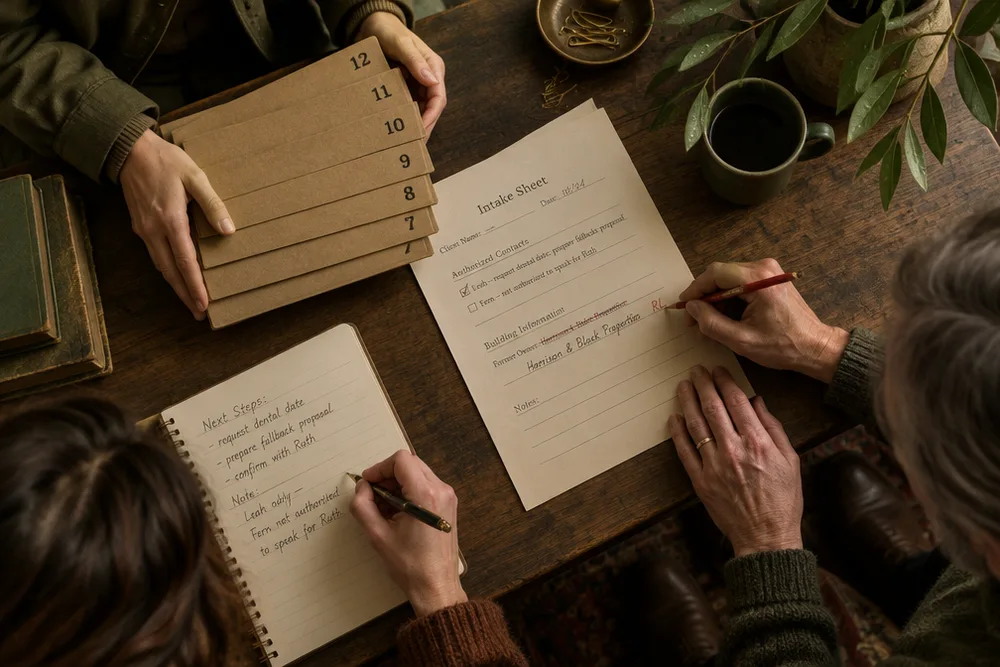
Fern’s turn came when Leah asked whether she could describe the unsigned parts of the practice. Fern said she could explain that Mara kept blank slips under the till and that she sometimes signed them before a payment was made. She could not identify which other receipts she had signed, or which payments she had counted. Leah wrote that down too.
“I’ll answer only what I know,” Fern said.
“Good,” Leah replied. “And if you don’t know, say so. Don’t fill the silence for the other side.”
Ruth closed her ledger. “That’s what you did today.”
Fern felt the words land. “Yes.”
For a while none of them spoke. The queue had thinned; the next tenant’s appointment was private at the library, not here on the sidewalk. A bread cart rumbled past, its canvas awning brushing the table’s far corner. Fern lifted the document sleeves before they could slide, and Leah secured them again in the order they’d been numbered.
Ruth got as far as fitting the pencil along the spine of the ledger. Then she took it out again.