The Things We Called Scrap
Chapter 1 · One Square of Clean Tile
Page 1 of 208
Chapters
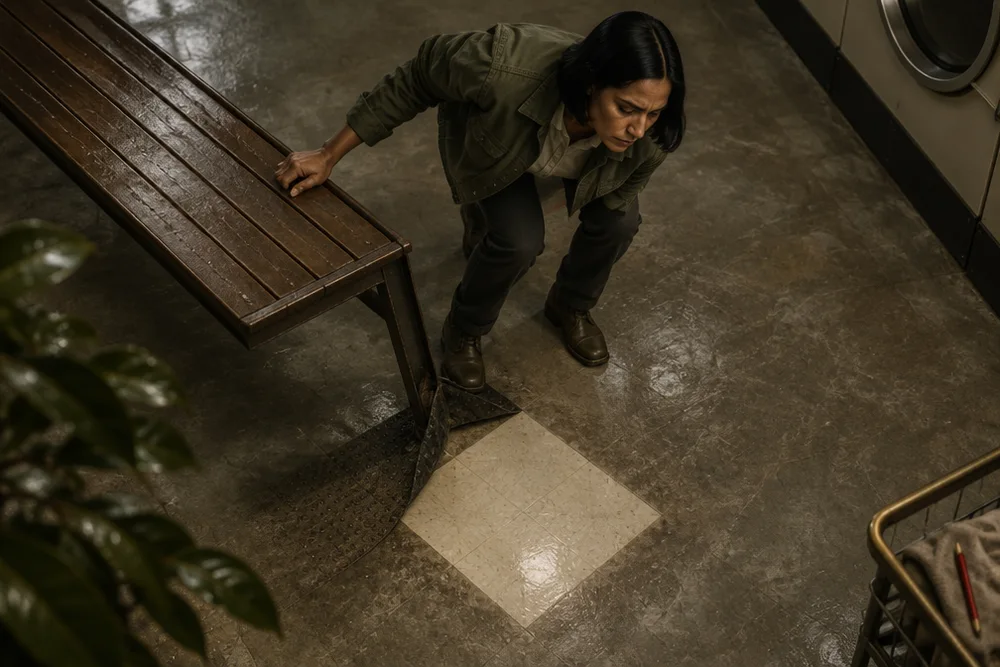
By six, the washers were gone and the dryers had left pale circles on the floor where their feet had stood. Fern Ellery dragged the last bench toward the front window, one end scraping over the tile. The shop was narrow enough that the bench nearly touched both walls. She turned it sideways and pulled again, boots braced, shoulders sloping under her olive work jacket.
The bench caught on something. Fern stopped, set her jaw, and leaned down to see what had snagged it. One leg had hooked a strip of old rubber mat. She tugged the strip free and found a square of tile beneath it, clean and faintly glossy, while the rest of the floor wore a gray film of dust and detergent. The little square looked recently uncovered, though it had been hidden for years.
She sat back on her heels. Her mother had scrubbed that spot by hand, probably, or kept the bench there to hide a crack. Fern remembered Mara kneeling with a rag and a bucket, bottle-green cardigan sleeves pushed up, chin tilted as though even the floor needed to be instructed. The bench had been heavy then too. Fern had been small enough to sit on it while Mara worked.
She stood and pulled the bench the rest of the way. It slid onto the clean square with a low wooden groan. The mark beneath it was not a crack but a patch: one tile replaced with a close match, its grout line a little too straight. Fern crouched again and pressed her thumbnail into the fold of the work order in her pocket, though there was nothing she needed to hand over yet.
The work order was from eleven years ago, folded until the paper had gone soft at the creases. Mara had written the date and the name of the man who repaired the tile, then left the amount blank. Fern had found it while clearing the office drawer. She could have put it in the box for Nell, but there was no bill to pass along, and the patch belonged to the building now.
Nell Vossner had asked for vacant possession in plain terms. No equipment, no stock, no loose fittings. Fern had signed the sale agreement at the kitchen table of a title office and still, somehow, kept imagining she might leave one thing behind. The steel change machine stood near the counter, too old to take bills and too heavy to move alone. Its coin return had not worked in eleven years. It could be a fixture, she had thought. A piece of the shop rather than one more object to dispose of.