The Things We Called Scrap
Page 4 of 208
Chapters
She could hear traffic and, farther off, the bakery’s delivery van backing toward the loading door. The evening shift at the bakery ended at different hours each week. Inez Vantrell had once told Fern the schedule came out late because the manager liked to keep everyone guessing. Fern thought of her only because the van had the same squeal when it turned.
Mara had kept the laundromat open later than the posted hours whenever somebody came running from a bus. She used to say a person should not have to pay extra because their ride was late. Fern had hated closing after the last bus, standing at the curb and watching its red lights disappear. She had sworn she would never build a life around somebody else’s schedule.
Now she was standing in the emptied room, working late without pay to finish her mother’s affairs. She had told herself the sale would end that. It would end the bills, the maintenance calls, the landlord’s messages, the small errands that came with a dead woman’s keys. It would not erase what she had done for free already, or what she still had to do before noon.
Fern took a broom from the back closet. The bristles were frayed and bent. She swept the floor in short strokes, pushing dust toward the door and avoiding the clean tile square. The patch looked almost brighter under the fluorescent tubes. She kept the broom moving until she heard a truck stop outside.
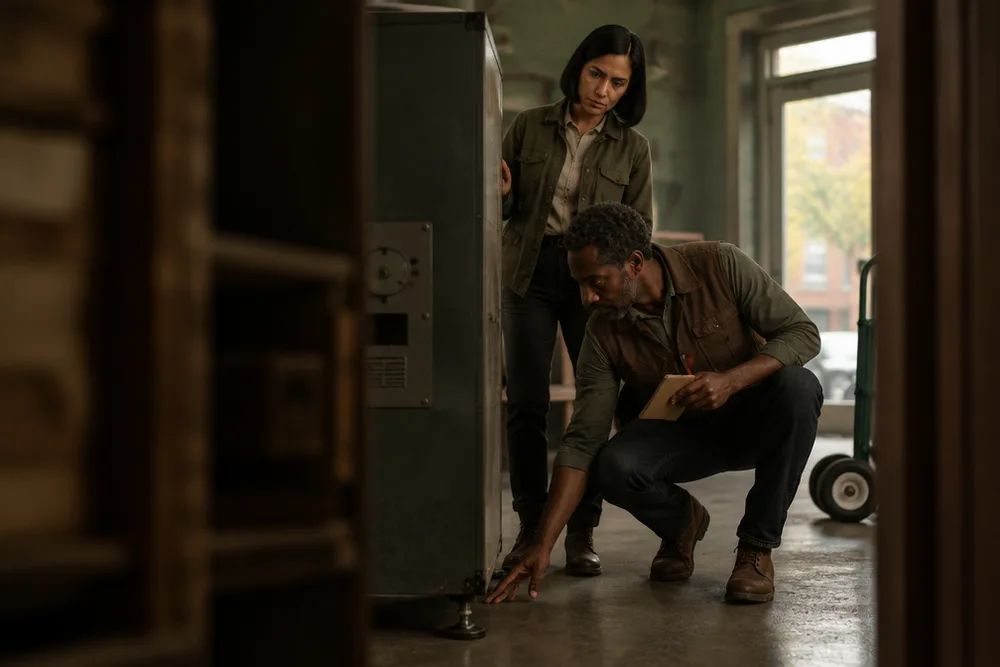
Orson came in carrying a tape measure and a small flashlight. He was taller than the doorway made him look from outside, with short graying twists and a coffee-brown canvas vest. One knee stayed unlocked as he stood, his long forearms loose at his sides. His green dolly was still in the truck; the white replacement wheel showed through the open door.
He did not offer a greeting beyond “Show me.”
Fern pointed. “There.”
Orson looked at the machine, then at the entrance, then at the narrow space beside the wall. He measured the door and the machine, writing the numbers on the back of his card. He crouched to inspect the feet and ran his fingers beneath the casing without touching the coin return.
“Is it attached?”
“Maybe.”
“You’ve got to know.”
“It was here when I was a kid. I never moved it.”
“That’s not the same thing.” He looked up at her. “If it’s bolted down, I need tools. If it’s got a full hopper, that’s extra weight. Any idea?”
“It hasn’t taken a bill in eleven years. Nobody’s used it.”