The Things We Called Scrap
Page 191 of 208
Chapters
Dev glanced at his notes. “I can ask.”
“Ask for an evening hour once a month,” Ruth said. “Not all day. One evening. If you want people to come in person, let them come after work.”
The draft said that tenants would receive a receipt after their payment was processed. Leah read it over Inez’s shoulder. “That isn’t the same as a receipt at the window. What happens if the cash is taken and the system is delayed?”
Dev rubbed one thumb over the wallet’s edge. “The office can issue a handwritten acknowledgment.”
“With the unit and month?” Ruth asked.
“Yes.”
“And the amount, date, and the name of the person who took it?”
He paused. “We can add those fields.”
Inez leaned forward, broad brow creased. “There are two copies. The payer gets one while standing there. The office keeps the other. Both filled in. If the month is wrong, it gets corrected there, not after it disappears into your system.”
Dev looked at the draft again. “I can revise it to say that.”
“You can revise the procedure,” Leah said. “You can’t tell them it’s in place until the owner approves it.”
“Understood.” His voice had lost the polished firmness of the proposal. “I’ll take these requests back.”
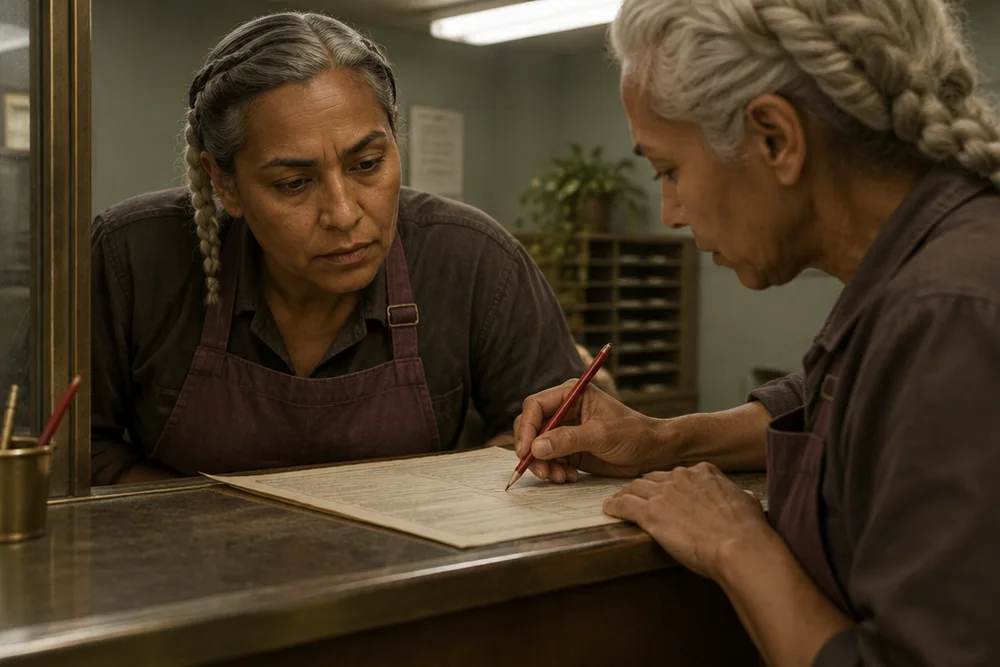
Ruth tapped the paper with her red pencil. “And no fee. We’re not paying to get a record of paying.”
Dev wrote it down. He had bought a balance sheet he trusted less each time someone made him look at its assumptions. He was not the landlord, and Fern could see the limits of his authority in the careful way he held his elbows close. But he could carry a request to someone who had it.
“We’ll want a copy of the approved procedure before the first payment date,” Inez said. “Not a promise in this room.”
The approval took four days. Dev called Inez first, not Fern. Inez relayed the terms to the others in a short message: Thursday ten to four, one Wednesday evening each month, no fee, cash accepted by a named office clerk. A completed receipt would be made in duplicate at the time of payment. It would state tenant, unit, month, amount, date, and clerk’s initials. The owner would keep one copy; the payer would leave with the other.
At the next meeting, Leah brought the written procedure. It carried the property company’s name and a date. Ruth read it all the way through, then read the receipt fields aloud. She stopped at the line about applying a payment to the oldest balance first.