The Things We Called Scrap
Page 18 of 208
Chapters
“Sure.” He took the pen she offered, wrote his name and the time, and handed it back. He left room beneath his signature for her to add the place. She wrote Ellery Wash, Saturday morning, and tucked the envelope into the inner pocket of her jacket.
The cabinet settled onto the dolly. Orson tested the balance, then tipped the handles down. The white replacement wheel rolled over the tile seam with a soft, regular bump. Fern walked backward, holding the door wide, as he moved the machine through the narrow shop toward the entrance. The front threshold caught the base; Orson stopped, adjusted the angle, and eased it over without letting the metal grind against the doorframe.
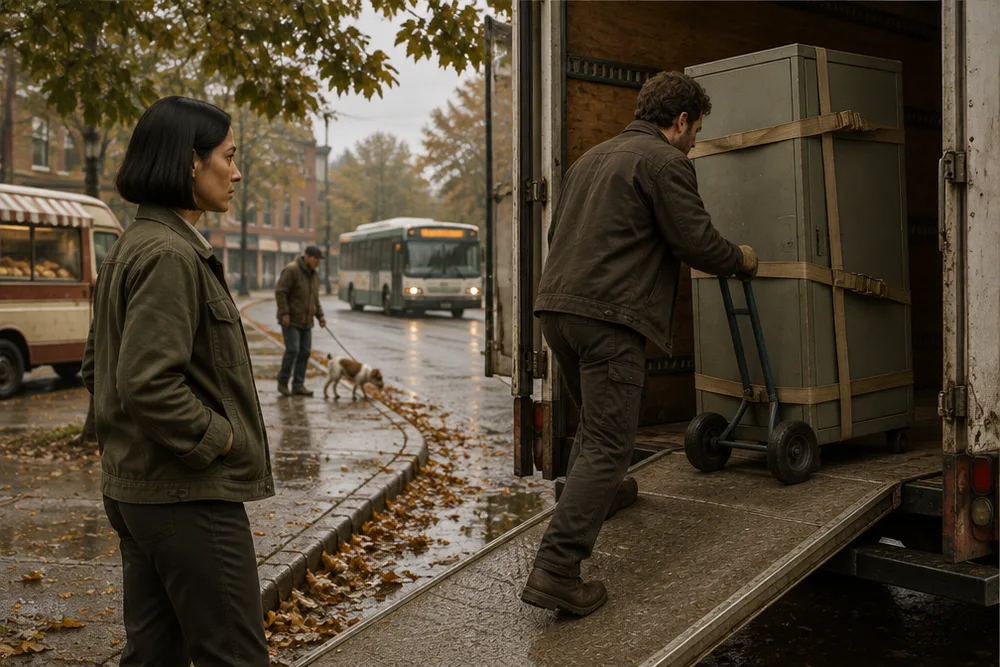
Outside, the street had filled with the low Saturday traffic of Copper Reach: a bakery van idling by the corner, a bus taking the long detour around the mill roadworks, a man walking a small dog that kept stopping at the damp leaves along the curb. Orson’s truck waited with its rear doors open. He rolled the cabinet up the ramp, locking the dolly at each change of angle. Fern watched the straps pass around the steel, not across the compartment panel.
“No pressure on the side,” she said.
“I know.”
“The panel is old.”
“I know that too.”
His voice stayed patient, but she heard herself repeating instructions because she had not yet found a useful action to take. She stopped. Orson tightened the last strap and checked each buckle with a hard pull. The machine stood upright in the truck, still closed, still holding the paper where it had been for years.
Fern leaned into the open cargo space and photographed the cabinet secured in place. She took one picture with the truck interior visible and another close enough to show the compartment was shut. Orson gave her a written storage receipt with the scale yard address and a charge for the first night. She folded it once, then caught her thumbnail pressing at the fold. She unfolded it and put it flat in the folder with the sale papers.
The shop behind her looked abruptly finished. Empty, but not vacant; scuffed, but clean enough to hand over. The machine’s rectangular mark remained on the tile, a darker outline of dust. Her mother’s repair to the grout showed in the middle of it, a pale line now exposed.