The Things We Called Scrap
Page 137 of 208
Chapters
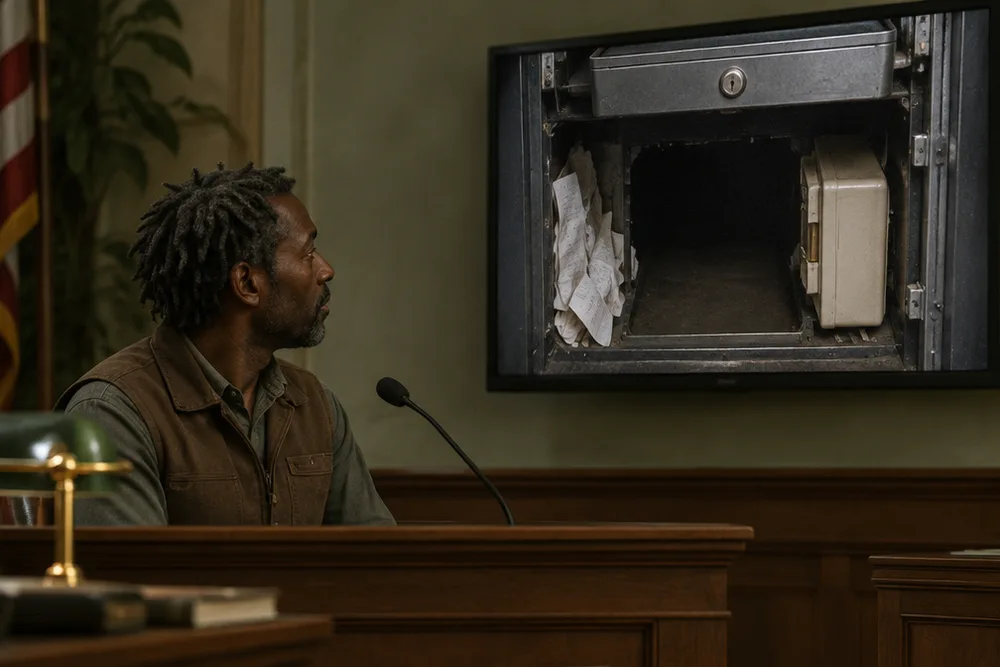
“I can’t testify to a second I wasn’t there for.”
The lawyer waited, perhaps expecting more. Orson leaned back a fraction. His knee remained unlocked. Fern felt the familiar urge to fill a pause, to make a statement sound complete when it was only as complete as it was. She kept her lips together.
Leah asked whether Orson had seen Fern sort, mark, or rearrange any receipt before the photographs. “No,” he said. Then, after a breath: “I saw her carry the box. I saw her put it down. I didn’t see her go through it.”
“And the machine?”
“Stayed intact until it was documented. It’s not in this courtroom now. The papers were.”
The judge asked Orson whether his account was from personal knowledge. He said yes. The clerk took the machine photographs as an exhibit, with the date and sequence identified. Fern saw the image of the open compartment appear on the courtroom monitor: the dark hollow beneath the cashbox, receipts packed against one side, the cream box still nested inside. It looked smaller than it had in the shop, and more official for being on a screen.
On cross-examination, Orson was asked again whether Fern had held the box before it was photographed. “Yes.”
“For how long?”
“I don’t know exactly.”
“Was it minutes?”
“Could have been.”
He would not offer a number to make the answer cleaner. Fern felt gratitude catch against her shame. She had wanted the record to begin at the key, as if discovery itself could certify what came after. Orson’s testimony left the interval visible. No accusation, no absolution—just a space in which he had not been watching.
When he stepped down, he passed near Fern’s table. He did not touch her shoulder or give her a private word. That was a kindness, too. The judge directed that the tenants’ individual exhibits would be taken up with their cases. Leah placed Orson’s signed statement in its own sleeve and pressed the flap closed.
Leah called Fern. The clerk administered the oath again, though Fern had already raised her hand. Her mouth had gone dry. She gave her name, address, and work, then confirmed that Mara Ellery had been her mother and had operated the laundromat. The questions were simple enough to tempt her into answering beyond them.
“Did you work at Ellery Wash as a teenager?” the landlord’s lawyer asked.
“Sometimes. I helped close.”
“Did your mother take rent payments there?”