The Things We Called Scrap
Page 118 of 208
Chapters
The memory stopped before the slips. No sound of cash on the counter, no particular tenant passing through the door. She could not use the shelter to reach backward and put money into someone’s hand.
Ruth Senn sat bolt upright across the table, oatmeal coat buttoned to the throat. She held a red pencil stub and her weekly tally, a page filled in narrow columns. “You used to do the latch twice,” she said to Fern. “Once when you turned the sign, and once when you went back to check it.”
Fern looked up. “I remember checking it.”
“You were in a hurry,” Ruth said. “That doesn’t make you careless about the door. But it doesn’t tell you who paid.” Ruth drew the pencil along one of the tally lines, not marking it. “People want a memory to be a whole room. Usually it’s a chair, a sound, a coat. You give them what you’ve got.”
Fern’s thumbnail found the paper fold again. “That’s what I’m trying to do.”
Cal did not come to Branch Nine. He had declined the group review the day before, and Leah had respected that. His brother’s payments were a separate claim, and Cal had asked that the texts about their private debts stay out of any court packet. Fern had once looked at the different first name on a receipt and thought she understood it. Cal had corrected her. He was not a clerical error, he had said; his brother had carried rent, and Cal had paid him back in installments.
Now the exhibit list showed only the receipt entries Cal had authorized and the outline of a phone testimony from his brother. A gap remained where two payment dates should have been. Fern stared at it too long.
“We can’t fill that with your theory,” Leah said without looking up.
“I know.” Fern turned the page over, then turned it back. “I keep wanting the papers to have one person behind them, making them all belong together.”
“They don’t,” said Inez. “They belong to whoever paid.”
“And whoever kept a copy,” Ruth added. “Which wasn’t always the same person.”
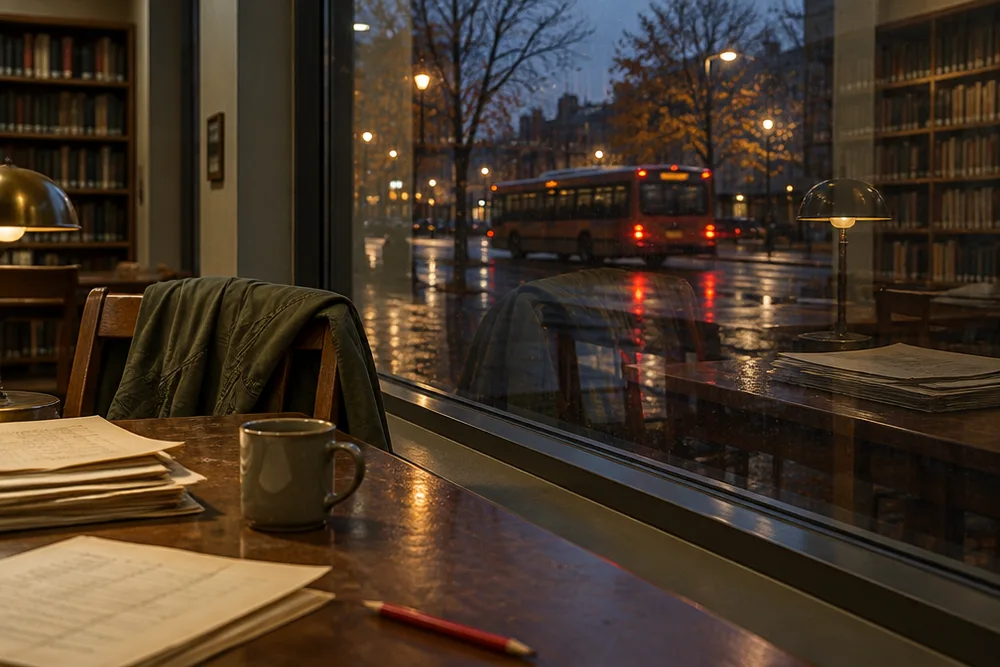
The room quieted. A bus sighed at the loop, then drew away, its red tail lights sliding across the library window. Fern could see herself faintly in the glass, shoulders sloped inside the olive jacket. She had been trying to be useful by solving the puzzle fast. The tenants kept requiring something more difficult: that she leave their pieces where they put them.