The Things We Called Scrap
Page 11 of 208
Chapters
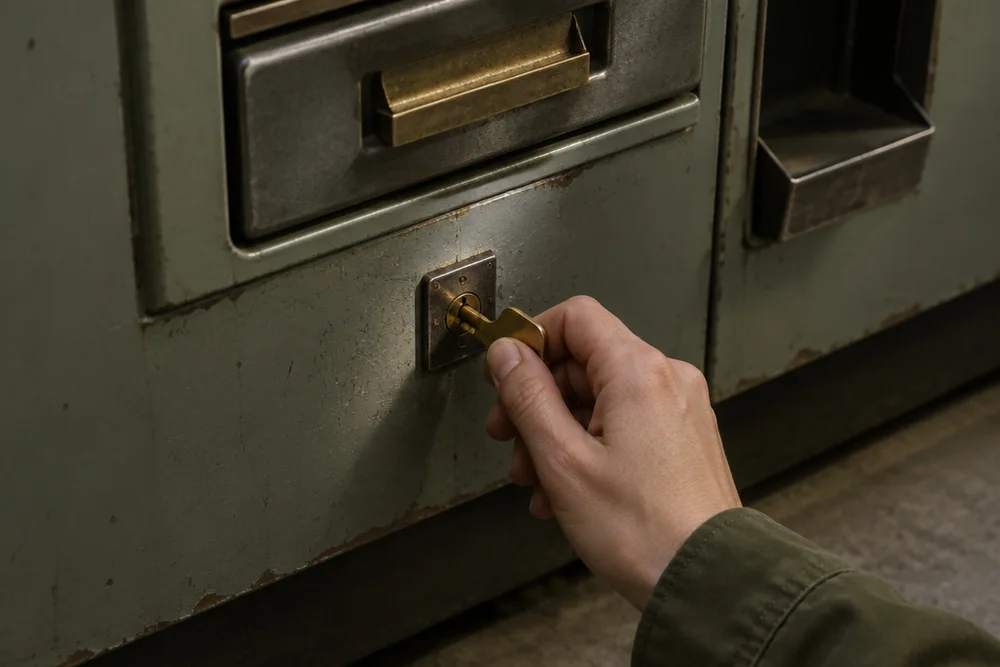
Fern stepped back. The shop seemed longer now that it was empty, its washed-sage walls exposing the old scuffs and a darker band where the machines had stood. At the front window, a stripe of sunlight reached the clean square of tile uncovered when she dragged the bench out the night before. She had kept the square clean when the rest of the floor was covered in lint. Her mother had repaired the cracked grout and never put it on the buyer’s list. Fern had noticed that only after there was nothing else left to notice.
Orson crouched with his hands beneath the cabinet’s lip. “On three. One, two—”
The steel shifted with a low groan. Fern caught the corner when he indicated, though the cabinet barely gave her anything to hold. Dust, flattened behind it for years, lifted into the air. The machine tipped toward the dolly; Orson’s shoulders tightened as he controlled the weight. Its base scraped the tile, then caught. He lowered it carefully, inch by inch, until one side rested against the dolly’s frame.
Something clicked inside the casing. A small metallic sound, distinct from the heavy creak of the machine settling. Then a brass key slid from the open coin return and skittered across the tile.
Fern saw it travel toward Orson’s planted boot. He kept the machine steady. She moved before she had decided to, dropping to one knee and stopping the key with two fingers.
The key was warm from the machine’s interior, or from her palm; she couldn’t tell. It had a flattened bow, rubbed smooth along one edge. The teeth were dark with grease. Fern held it between finger and thumb and looked at Orson.
“You knew about this?”
“No.”
“Could it belong to the cashbox?”
“Could.”
He stayed braced against the tilted cabinet. The dolly’s white wheel pressed into the tile, its rubber edge slightly flattened under the weight. “You want me to set it down?”
“Not yet.” Fern looked at the lower face of the machine. Below the cashbox, behind the coin return’s shadow, a narrow square of metal sat almost flush with the casing. Its outline was visible only where the paint had worn thin. She had emptied the visible cashbox years ago, after her mother stopped opening the shop and before the illness made every errand feel like a promise she might have to repeat. She had never taken the machine apart. The key in her hand seemed to belong to a version of the shop that had been waiting without asking her to look.