The Spoon That Measured Winter
Page 7 of 8
The girl came back with a stool. By then the dough had lifted the cloth a little, like a sleeper raising a knee under a blanket. Xanthe tipped it out and folded it into one round. There was no flour for her hands. She wet them instead, and when she took them away the loaf shone.
While it baked, the frost came up the seed-store door in the shape of a fern. At the oven the crust split down the middle and let out a breath that smelled almost like chestnuts. The girl ran off for her grandmother. Other doors opened before she got back.
Xanthe drew out the loaf. A man offered her a coin for the heel. She could have used the coin; she could have used a dozen of them. She shook her head and tore off the heel anyway. For a moment the man stood with money in one hand and bread in the other, not sure which to put away. Then he saw the girl easing her grandmother onto the stool. He took the bread to her.
Xanthe tore the loaf again. Steam passed between her thumbs and did not vanish. It ran low over the table and made a wet ring beneath the chipped bowl. Someone carried a piece across to the seed keeper. Where that person stepped, the whiteness between the stones went dark.
“Try the door,” Xanthe called.
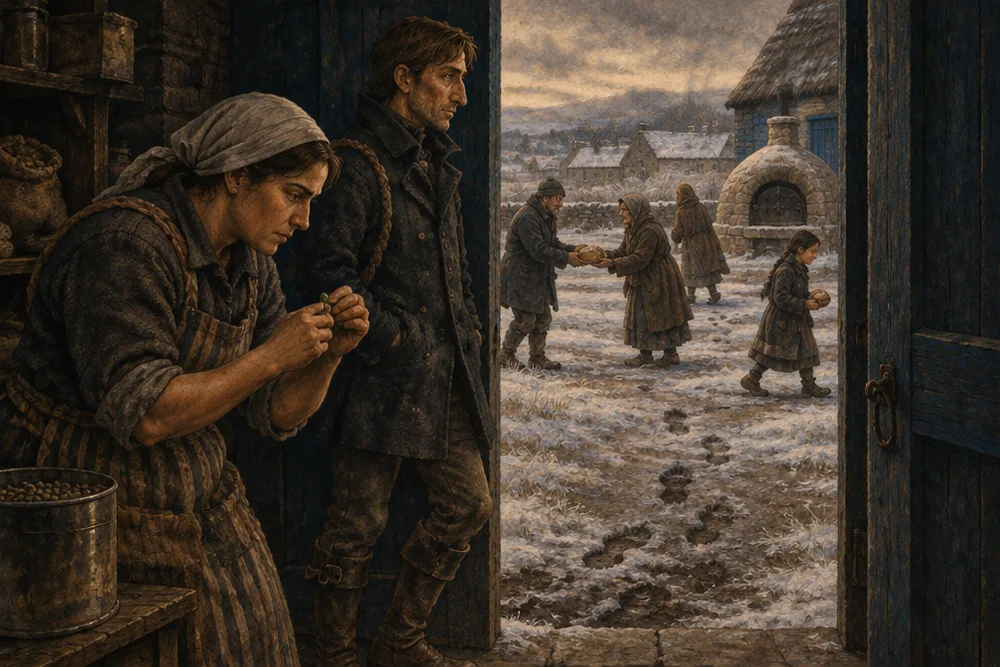
The seed keeper took a bite first. Then she tucked the bread carefully into her hood, where she could get at it with either hand, and put her shoulder to the door. It scraped across the stone. Merrin caught the edge and helped her swing it wide. From the lowest shelf she lifted a sack of seed peas. She took one between finger and thumb and pressed. It gave a little under her nail, just as a pea ought to.
Xanthe ate the last torn piece standing up. It was smaller than she’d have cut for herself and tasted better than the little trial loaves she’d baked alone. She scraped the crumbs from the table into her palm. Then she brushed her hands and left the oven door open.
“Is there another coming?” the man with the coin asked.
“Not out of that sack,” said Xanthe. She turned it inside out so he could see. “If there’s to be another loaf, somebody else will have to bring the flour.”