The Silence Under Bell Street
Page 74 of 303
Chapters
At the stairwell she stopped. The calibration room’s door had swung almost shut. Through the narrowing gap, she saw the bench, the dark recorder, the pale vent grille. No shadow moved. She went back for the recorder and slipped it into her bag. She had not taken a recording with her. She had erased the file; the card was empty. Still, she pictured the missing sound as a little object that had been carried in the machine and left behind when she played it.
The stairwell returned each footfall in a hard, clean slap. She counted the interval between them, the old work habit arriving before thought. At the landing, her steps came back once from above and once from below. Normal. At the ground floor, the building’s front door opened onto a windless morning and traffic noise, broad and indifferent.
She crossed to the bus stop. The recorder knocked against the side of her bag. She unzipped the pocket and checked that the power pack was disconnected. The indicator was dark. She removed the recorder and held it in her palm, its plastic body warm from the room. The speaker was a small black circle with dust caught in its rim.
The memory of Ruth’s voice stayed close without seeming to come from any direction. Kit could not tell whether she was recalling the sound or hearing its residue. She made herself listen to the traffic. A van passed over the uneven drain cover, its rear wheels giving a paired clatter. The sound traveled away, thinning with distance. It behaved as sound ought to behave.
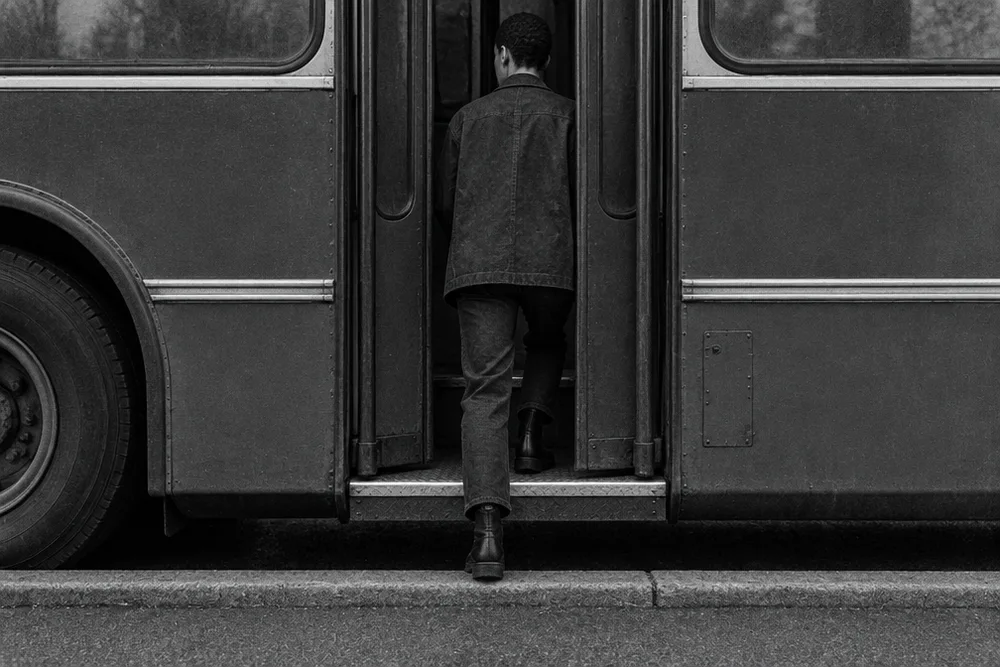
When the bus arrived, she put the recorder back in her bag. She did not look behind her at the council building. In the glass beside the stop, the door, the pavement and her own reflected shoulder held still. For a moment, beneath that reflection, a darker outline seemed to hang where the building’s shadow crossed the pavement, with a break at the throat. The bus door folded open; she got on before the image could settle.
Bell Street climbed steeply from the bus route, terraces pressed close on either side. Kit got off two stops early and walked the last stretch. She needed the cold air and the effort of the hill. Rainwater threaded along the gutter toward the culvert, which crossed beneath the old school footprint and went down toward the footbridge. She did not look into the grates.
The laundrette door stuck at the bottom where the frame had swollen. She shouldered it open and went inside. The machines were dark, their round windows reflecting the shop in broken circles. The tiled service hatch lay between them, flush with the floor. The air had the sour, clean smell of detergent and damp cloth. She could hear no chalk, no scraping chairs, no child.