The Silence Under Bell Street
Chapter 25 · Not Your Wall
Page 253 of 303
Chapters
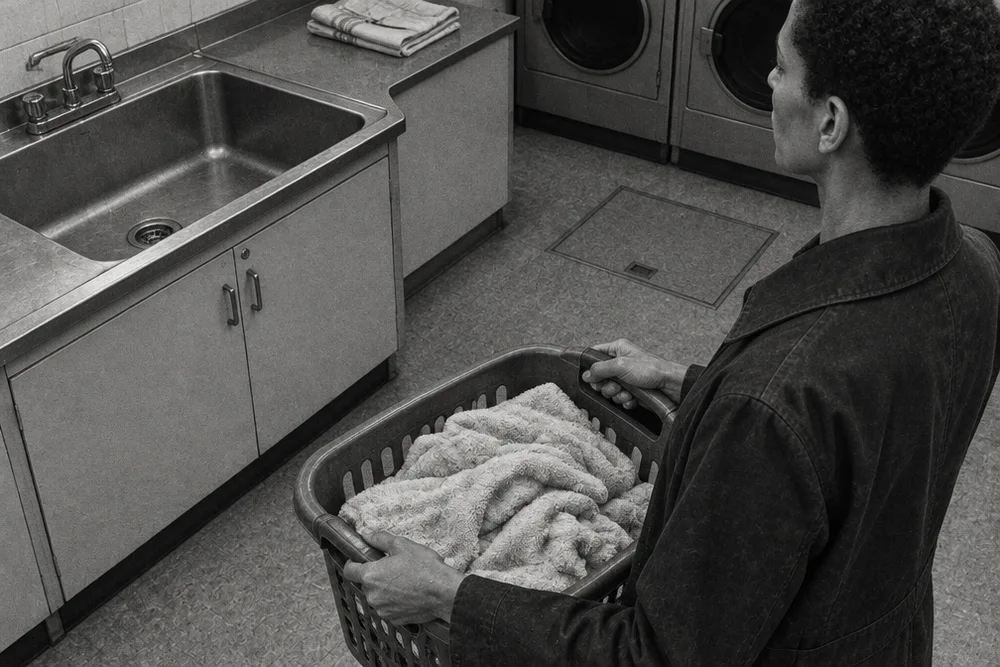
The voice came from the sink after the shop had closed, while Kit was carrying a basket of damp towels toward the back room. It used the pipes as a throat. A small metallic tremor traveled through the basin, and then Ruth said, with the careful patience she had used when Kit was a child refusing medicine, “I can tell you what happened in the wall.”
Kit stopped. The basket handles cut into her fingers. She could see the empty shop behind her: the dark machine doors, the pale squares of folded cloth on the counter, the service hatch shut flush with the tiled floor. No one stood at the sink. The shop’s fluorescent tubes had been switched off; streetlight made the chrome tap a narrow silver line.
“You want to know,” Ruth continued. The voice had her mother’s low, worn grain. “You’ve always wanted to know if I was still there. I can tell you what I heard. What you did.”
Kit set the basket down gently. The towel on top was warm from the dryer, and its clean, ordinary heat under her palm brought back the cellar: Ada with her paired socks, Elsie sitting beside her, the child’s face turned toward the open register. Ada had accepted the socks for tomorrow. She had not asked Kit to forgive anything. She had not asked Kit to stay. The voice in the pipes had no such restraint.
“Tell me,” it said. “Just ask me.”
The old reflex arrived as a physical leaning. Kit’s left ear turned toward the basin; her body knew how to make a room into a diagram, how to split a sound into its first arrival and its returning edges. A question would give the voice a line to travel. A recorder would give it a route. A sealed wall had once seemed like an answer, too: plaster, paint, a clean finish stroke over the place where Ruth had called.
Kit moved the basket away from the sink. She did not ask what happened. She did not ask whether her mother had been afraid, or angry, or alive for one final minute behind the wall. The pipe gave a soft settling tick, like a spoon touching a cup.
“You don’t have to pretend you’re not curious,” Ruth said. That was the cruelest part: not the voice, but the accuracy it borrowed. Kit had spent years arranging her curiosity into something that could pass for work. She had been paid to say where a sound was, not what it wanted.