The Silence Under Bell Street
Page 257 of 303
Chapters
Kit rose. She walked to the classroom doorway, but stopped an arm’s length from the plaster. The plaster was cool and dry beneath her fingertips. She remembered the work gloves, the stiff brush, the wet pale mixture caught in the grooves of her knuckles. She remembered how hard she had pressed at the end, smoothing out a ridge that would have shown beneath paint.
“I can tell you,” Ruth said from behind the wall.
Kit set the lantern down. The vent above her held a darkness that looked deeper than the gap between its slats. She did not lift the light to inspect it. Her own shadow stretched across the floor, joining the doorway’s shadow without changing its outline.
“I’m not asking you,” she said.
There was no echo. The sentence did not come back from the brick or the pipe. It belonged to the room and stopped there.
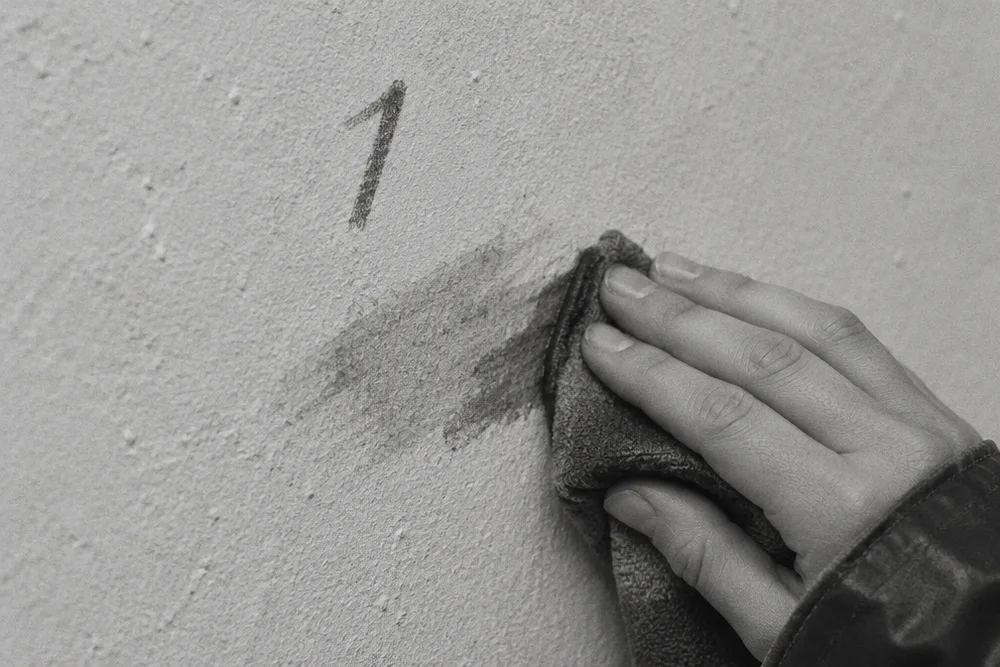
Kit took a folded rag from her pocket and dampened one corner from the water jug. She rubbed at the first penciled mark. The graphite blurred into a gray smear on the plaster, then lifted onto the cloth. The time underneath vanished. She worked slowly, keeping her fingers close to the surface so she would not scuff the paint.
Ruth spoke again, but now the voice had changed. “Kit.”
It was not an imitation of her mother calling from the kitchen. It was her mother’s voice at the end of a sentence, soft and familiar and placed exactly where Kit’s attention had been. The sound could have meant come here, forgive me, help, or nothing at all. Kit’s hand paused against the wall.
She shut her eyes. Behind them came the little kitchen with its chipped green table, Ruth’s white braid over one shoulder, the vest pockets shining at their edges. Her mother had stood with one hip against the wall and looked tired. Kit could not remember what they had been arguing about. She could remember the exact shape of her own impatience.
When Kit opened her eyes, the plaster was still plaster. She rubbed away the next mark. “You don’t get to use her name as a door,” she said, not loudly.
A thin scrape traveled behind the wall from left to right. Kit waited for the return, counting in silence: one, two, three. Nothing answered from the opposite side. She set the rag against the third mark and wiped it clean.
The marks had mattered to her because they made the voice locatable. A sound with a location could be approached, tested, and eventually contained. Kit had lived by that sequence until the day she learned how neatly a measurement could be used to end an argument. She had never found a measurement that could tell her whether Ruth had been there after the wall closed.