The Silence Under Bell Street
Page 24 of 303
Chapters
She did not turn on the machines. She did not make coffee. At six fifty-five she stood in the center of the laundrette, looking at the hatch and listening for the first settling sounds of the building.
At six fifty-seven, a tap came from the drain beneath the sink.
Kit went to it. The tap repeated, twice, separated by a pause. She pressed her palm to the cold pipe, then lifted it away. Nothing moved under her hand. The sound seemed to come from the wall behind the sink, though the pipe ran in the opposite direction.
At six fifty-nine, the clock over the till made a thin mechanical click. Its second hand moved to the twelve.
Seven.
A chair scraped across the cellar floor. Chalk squealed in a line, stopped, then began again, shorter this time. Kit took the lantern and unlocked the rear door. She had decided not to go through the hatch. It was too small and would leave no clear way back if she needed to climb quickly. She would use the stairs and keep the door behind her open.
She stepped onto the first tread. The wood flexed. She put her left hand on the rail and began to count the steps. One. Two. Three. Four. She knew from the plan that the stair had eleven, but she counted them anyway, making each number a small fact she could hold on to.
At the bottom, the lantern showed a brick cellar with a low ceiling. Damp spread in dark patches across the walls. The floor was bare except for a few broken tiles and a metal shelf. At the far end stood the sealed classroom doorway. The outline was visible beneath a rectangle of newer mortar, lighter than the surrounding brick.
No child was there. No chair. No chalk.
Kit listened. The room returned the smallest sounds of her breathing, but not the scrape that had brought her down. Behind the sealed doorway, something shifted. She could not tell whether it had moved toward her or whether she had finally reached it.
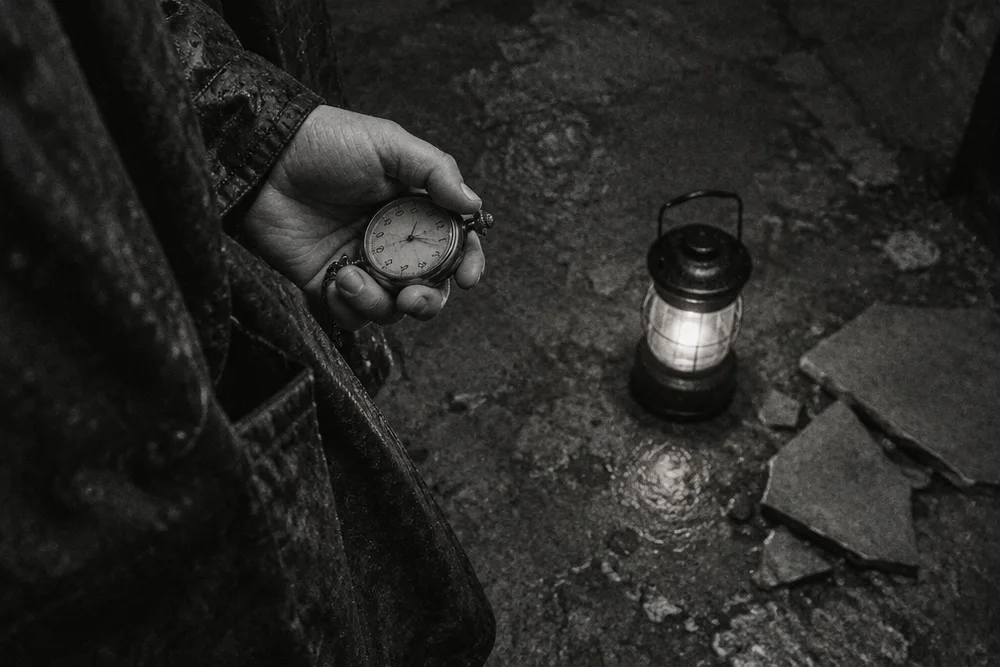
She set the lantern on the floor and took out her watch. She was going to clap from the first landing, the second, and the bottom. She would time the response, write it down, and decide what the wall could contain. Then she would retrieve the council kit from storage, the one she had not used since she left the job. She would need its microphone, its calibrated meter, and the old habit of trusting numbers before voices.
Above her, the laundrette clock clicked onward. The cellar held its breath.