The Silence Under Bell Street
Page 210 of 303
Chapters
She went down to the shop. The front door stayed locked. She turned on the lights and arranged the detergent bottles in a straight row, then moved one bottle half an inch to the left. It was the kind of work that made a small, visible difference. Her hands were steadier when they had a task. She wiped a dry counter that did not need wiping and listened to the humming fixtures.
At six forty, the cellar gave a faint scrape. A chair, moved a little way. Kit put the cloth down. She did not go to the hatch. She did not make a sound. Her own name had been called, and she had withheld the answer. She could not tell whether that restraint protected her or simply kept Ada waiting.
The light over the service hatch flickered. For one beat, Kit saw an extra shadow on the tiles beside it. It had a human outline, too tall and narrow to belong to a child, and it did not attach to any body in the shop. A pale bar of light shifted across the floor. The shadow stayed. At the throat, where a collar might meet the jaw, there was a clean, unlit gap.
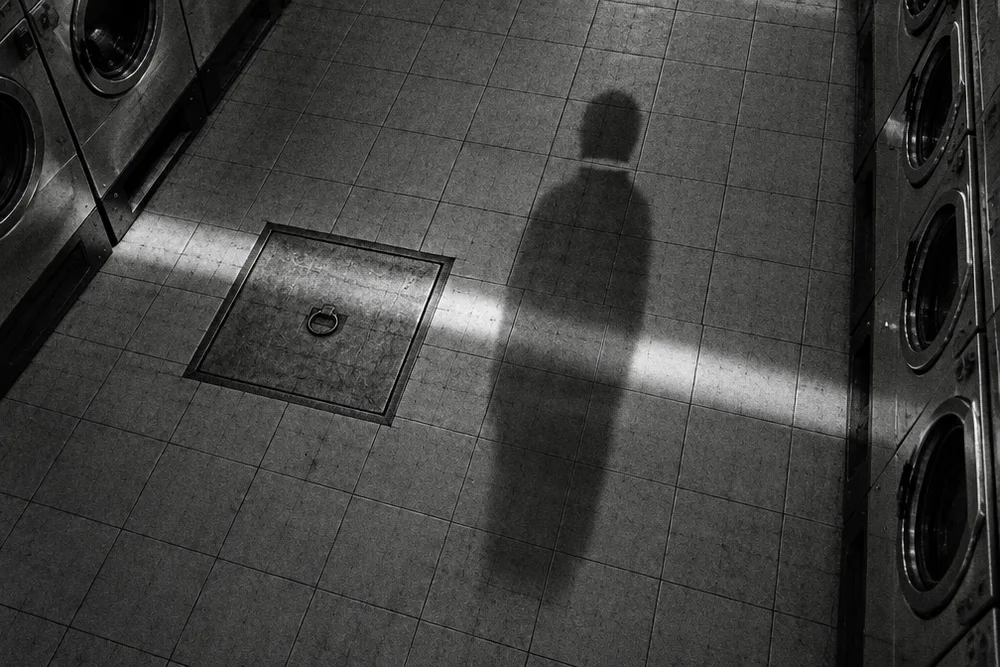
Kit backed away. The outline did not move. She turned her head to look toward the window, then toward the rear stairs. When she looked back, the shadow had gone. The tile was empty except for the hatch and the faint marks left by years of dragging laundry baskets across it. She tried to find the direction of the light that had made the shape, but the ceiling fixtures cast no strong shadows at all.
At six fifty-five, the first customers would have been arriving on an ordinary day. None came. Kit stood by the counter, shoulders locked, and watched the clock. The minute hand crept forward. The service hatch remained shut. Under the floor, the room waited for roll. She thought of saying her own name aloud, privately, to the empty shop. She did not know whether that would count. The rule required an answer from the cellar, unamplified, and she would not take a chance on making the wrong sound.
At seven, the old school seemed to wake. Chair legs scraped in the cellar, one after another, slow and close together. A chalk squeal followed, faint but sharp enough to make Kit’s jaw ache. It came from beneath the machines, where the brick cellar held the sealed classroom doorway. The sound had the room’s dimensions in it: the ceiling height, the deadening plaster, the little pocket of return at the back wall.