The Silence Under Bell Street
Page 204 of 303
Chapters
She was on her feet before she had decided to move. The cry came again, muffled by floorboards and the cellar door. It was Ada’s voice. The dead girl had called her name before, in the quiet after roll; Kit had heard the words from the tiled service hatch and had answered once, as herself. That answer had fixed her echo to the room. She had thought of it as a risk, a small, contained act. Now the sound of Ada’s fear ran through the flat and lodged behind her breastbone.
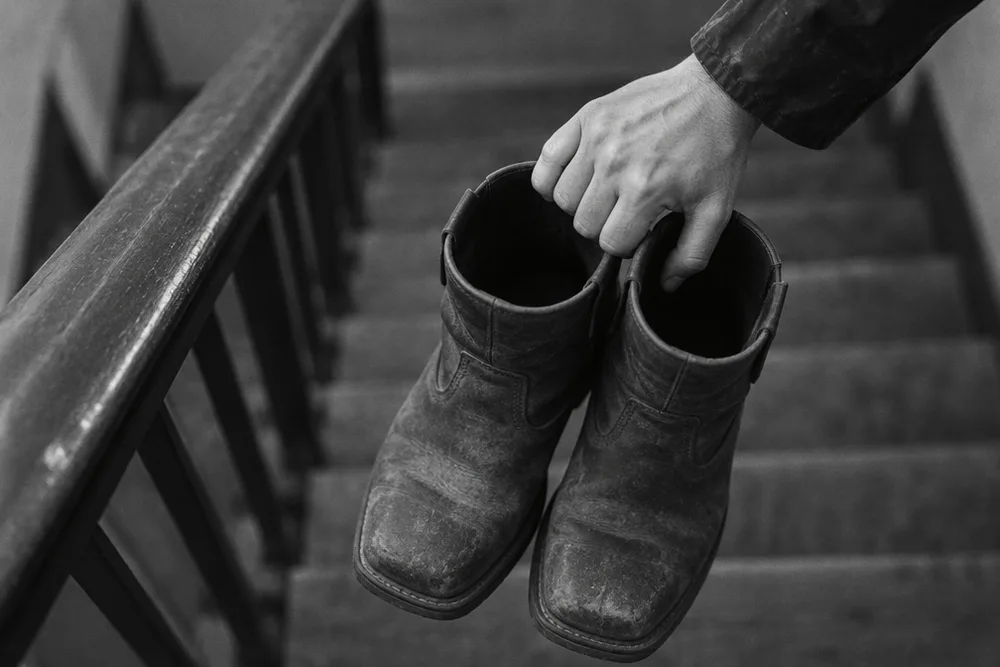
The clock said four twenty-two. Friday had not begun according to the shop’s usual rhythm, but dawn was close. Ada’s roll would start at seven. Kit had three hours to call someone, to make a plan, to find a way to get through the night without going down. Instead she grabbed her boots and took the stairs two at a time.
She stopped on the landing outside the laundrette. The machines were dark. The shop windows showed only the pale reflection of her face and the angled lines of their frames. A faint rustle moved beneath the counter. It might have been water passing the trap. It might have been a child shifting her feet on the cellar floor. Kit held the stair rail and listened. No voice came this time. The absence pressed harder than the cry.
She went to the service hatch. It was set into the tiled floor between two machines, its metal ring worn smooth by years of use. Kit crouched and laid her palm on the tile. The cellar was cold beneath it; she could feel no vibration, no movement, only the faint unevenness of the grout. The hatch had been left shut and latched. A thin strip of black showed at one edge, but the gap was old and no wider than it had been yesterday.
“Ada?” Kit said, then froze. She had not meant to speak. The name had come out on habit, a test, a plea. She held still, but nothing answered. The silence under the hatch felt crowded. She pulled her hand away and wiped her palm on her jeans.
Her first impulse was to open it. The second was to call Elsie. Elsie had heard the child’s cough in her sink and had carried her own memories of the fire for seventy years. She could come down and stand beside Kit. She could see the stairs, the doorway, the unclaimed coat. But what would Kit tell her? That the child was calling from below, and Kit had already given her name to the register? That a voice like her dead mother’s was speaking through the pipes? It would sound like an excuse to ask someone else to take the risk.