The Seams Beneath the Tide
Page 22 of 277
Chapters
The machine needle entered the folded cloth. Greta guided the seam, keeping the edge straight. There was no voice, no knock, only the rattle of the machine and the thrum of its belt. She reached the corner and lifted the presser foot to turn the coat. A tiny space had opened where the fold thickened. A channel, barely wider than the needle, ran between the overlapping layers.
She put her thumbnail against it. The cloth gave slightly. If she sewed across the fold by hand, she could close it as Gwenna would. But the whole point of the machine was to save time. Greta lowered the foot and finished the seam. The gap remained at the corner, almost hidden beneath a ridge of thread.
When Gwenna came back, she set down an empty bundle basket. “You’re getting through them.”
“Yes.” Greta did not mention the cupboard. She did not mention the voice. The secret settled between the rack and the machine, small enough to conceal and large enough to alter every stitch.
The afternoon went on. Greta stitched cuffs, checked pockets, and sorted garments by the names on their labels. She listened to the ordinary noises of the laundry: water running in the sink, a customer’s shoes in the front room, Gwenna’s scissors closing on thread. Each time she heard a knock, she looked toward the garments before she could stop herself. Each time it was a pipe, a dropped spool, or someone at the door.
The pale gray tape on the child’s coat showed a name in blue ink. Greta knew not to read it aloud near the garment. Gwenna had taught her that there were rules about the coats, though she had never explained why some rules mattered more than others. Keep them dry. Keep the cuffs close. Never let one touch another when damp. Finish each seam by hand. Return the coat to the hook at low tide.
The machine had broken the last rule without breaking the cloth. A gap remained. Greta could have unpicked the row and resewn it by hand, but she did not. She told herself that a machine seam was still a seam, that every stitch was secure enough to hold. A practical excuse, she knew, because she had already heard the child ask for cake.
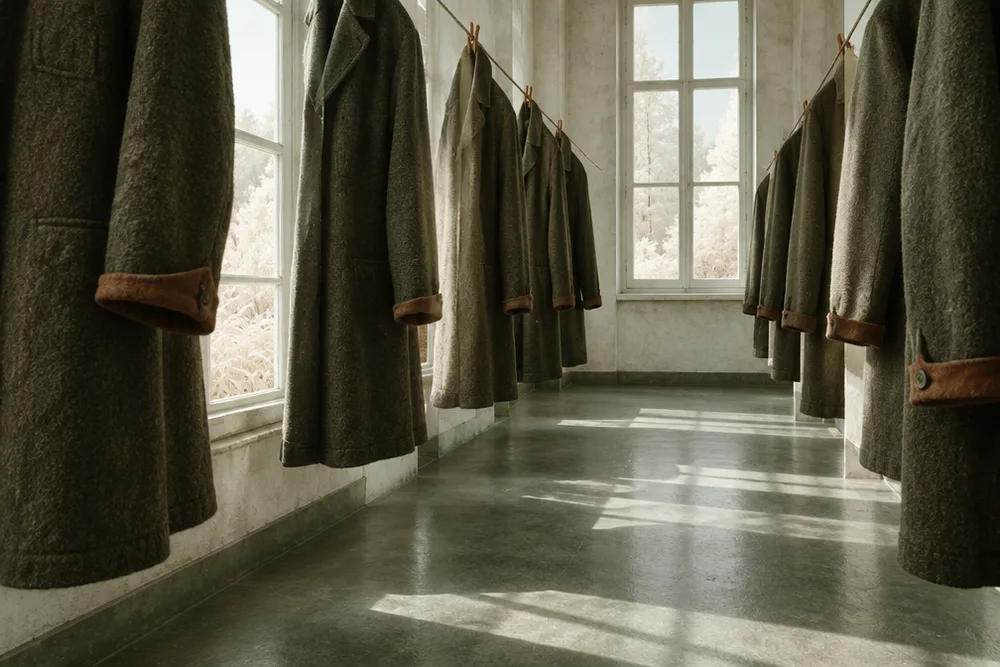
When a gust pressed at the rear door, the hanging coats shifted. Their hems brushed the air, not each other. Greta rose and checked the spaces between them. She moved one sleeve a hand’s width away from its neighbor, then returned to her chair.