The River Has Another Door
Page 25 of 230
Chapters
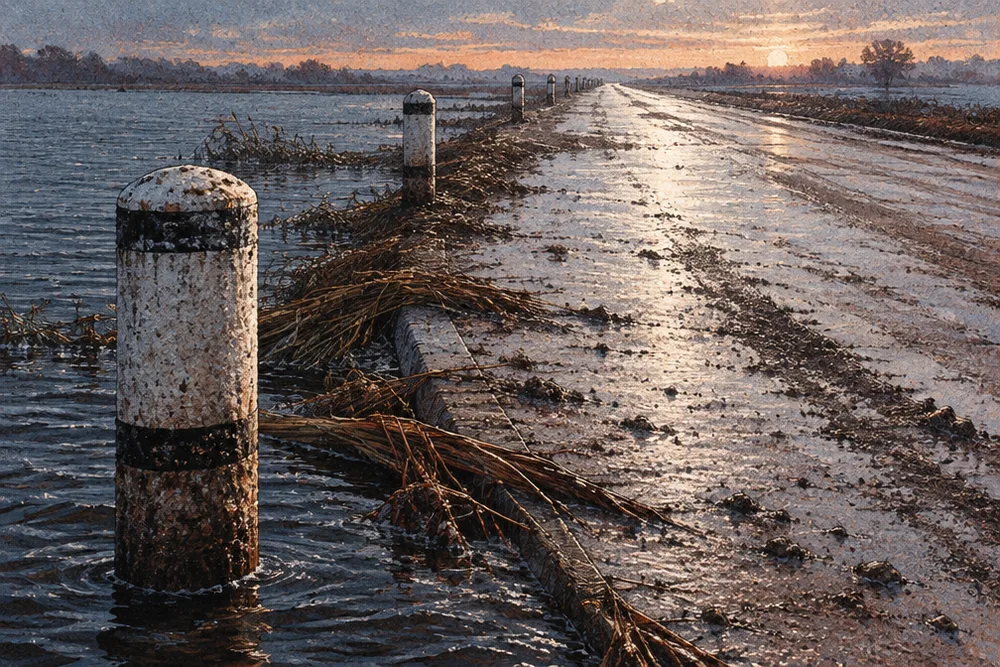
At dawn, Leda was back before the first bus. The causeway was still slick, but the water had slipped below its edge. She set her camera on the landing post and filmed the exposed road, starting low on the nearest flood peg and tilting upward as each pale ceramic marker emerged from the wash. The road was not clean. Mud streaked the surface, and reeds lay flattened against the curb. It was passable, not safe by promise.
Ivo stood beside the gauge shed, his keys in his hand. He did not tell her to leave. Leda filmed the waterline easing down the ramp and the roof’s tarred edge vanishing beneath the reeds. Then she stopped the camera.
“The road cleared,” she said.
“It usually does.”
“That doesn’t mean it wasn’t dangerous last night.”
“No.” Ivo put the keys away. He sounded tired rather than angry. “You should be getting ready for school.”
Leda checked the time. Her audition was still days away, but the six o’clock bus would come in less than half an hour. She had made the footage she wanted: the road becoming visible. Still, it looked less like an answer than it had yesterday.
On the landing post, something pale caught against a splinter. Leda crouched and found a narrow paper stub folded over the wood, as if the water had carried it there and left it within reach. She held it only by the blank edge. Its violet stamp showed a date, neat and unmistakable: tomorrow.
She brought the stub close to her camera. The date matched the day after today, not the day it had first appeared. Leda checked the calendar on her phone, then checked again. The numbers did not change. The river had dropped; the road had returned; the stub had moved on.
“Ivo,” she called.
He was already looking at it. His face went still. For one breath he seemed not like the keeper, but like someone standing beside a door he had hoped would stay shut.
Leda did not ask to take it. She waited until he gave a small, tired nod. Then she slid it into the notebook she carried for audition notes, between a page of bus-tire waveforms and a list of sounds to record. She closed the cover around it and tucked the notebook inside her jacket.
The causeway shone in the new light. Leda watched the road, not the water. By dawn it had always dropped. That had never meant the town was safe; it had only meant the bus could pass.