The River Has Another Door
Page 230 of 230
Chapters
Leda’s phone buzzed in her pocket. The training program had posted next cycle’s audition dates. She had saved the requirements: a new piece, a clean recording, a written note on how she had made it. No acceptance was waiting in the message. No exception for missing the last audition. There was only a date six months away and a list of work to do.
She opened her notebook and wrote the date beside the ferry timetable. The paper was already crowded with crossings, dispatch shifts, fare changes to review and names that had chosen to be called. She put the audition date in the margin, where it would not cover anything else.
“You’re coming back for it?” Sami asked.
“I’m going to try for it.” Leda shut the notebook. “That’s not the same as promising I’ll get in.”
“Good. Promises shouldn’t be made by people who don’t control the result.”
“You’ve been talking to Nessa.”
“I have.”
At the loft, Mara had left a paper cup of tea beside the dispatch table. It had gone cool, but Leda drank it anyway. Sami was sorting the next day’s crossing cards into a tray: freight, clinic, passenger, return. The labels were plain. The rules were posted beside them, where anyone could argue about a missed connection or ask why a fare cost what it did.
Leda slipped her recorder from her pocket and read the permissions she had gathered. The bell, yes. The paper, yes. Doro’s eight-second clip, still approved for the particular use Doro had named. Other voices stayed private. She could build a sound piece from doors, boards, motors, the river under the guide line, and the spaces between what people chose to say.
She pressed the recorder’s button, but did not start it. A knock sounded at the open door. Someone on the steps asked whether the late boat had room for a passenger and a bicycle.
“It does,” Sami called. “Bring the bicycle down carefully. The ramp’s slick on the second turn.”
Leda put the recorder away and went to answer the dispatch bell. Her hand stopped briefly over the red loop, as if listening for something the machine could catch. Then she took her turn at the table.
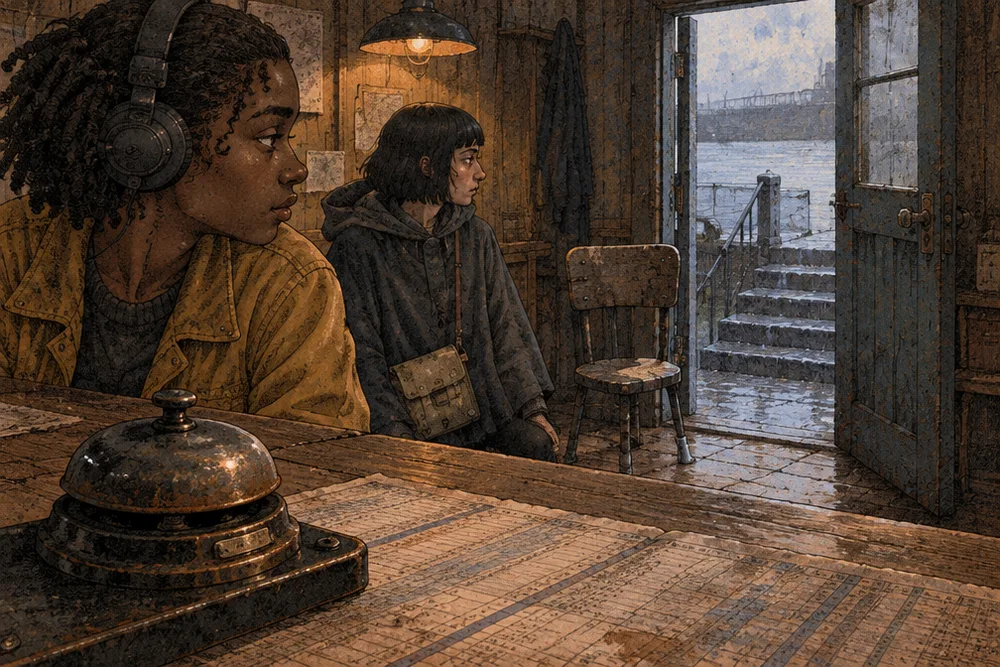
Outside, the river kept its ordinary level. The chair stood at the head of the dispatch table, its tin foot planted on dry boards. Beyond the open door, wet steps led down to a landing that worked in both directions.
The timetable in Leda’s notebook held room for the next ferry and, in the margin, the date she would try again.