The River Has Another Door
Page 176 of 230
Chapters
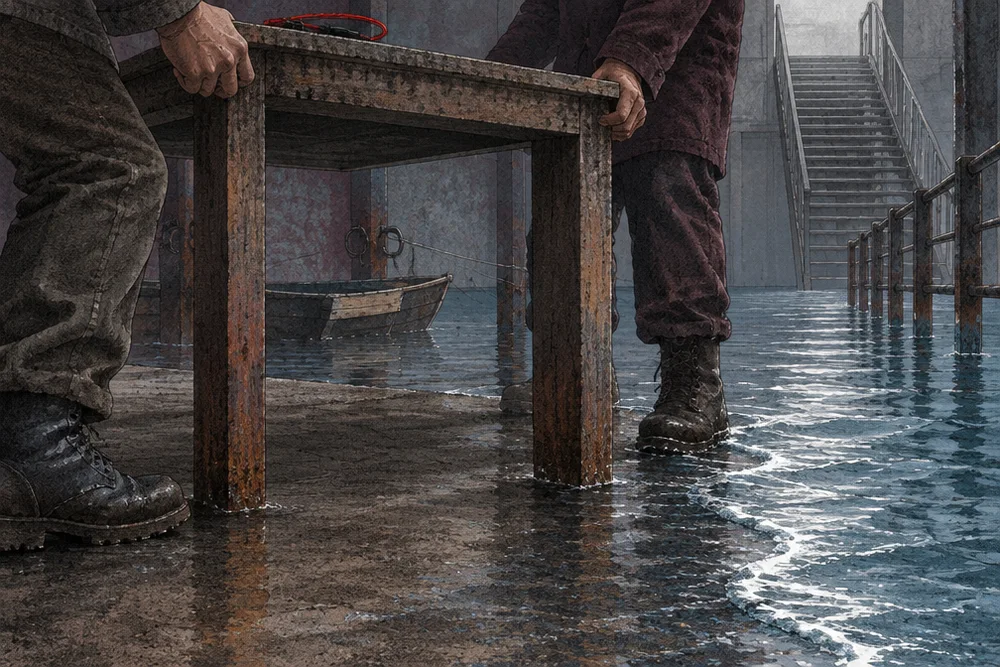
“Not on the stair,” Doro called from the landing.
“I’ve got them.” Sami pressed the tags into a neat stack and set them on the back corner of the table. The open strip from the door to the high stairs remained clear. Beyond it, the low side of the room had taken on a reflective sheen. The emergency stores were safe on their raised supports, and the people who came through would have somewhere dry to stand.
The steward began making marks on the passenger sheet, though no one had arrived yet. He had put a number at the top of the page and drawn a line beneath it. Sami noticed that he had left the permit boxes on the old clipboard, closed beneath the page. The form was still there; its authority had not vanished. But for this crossing, it had stopped taking the doorway hostage.
“When they come,” Sami said, “don’t ask them to prove what they are before you let them in.”
The steward looked up. “I heard you.”
“I’m saying it once while we’re still here to hear it.”
He held Sami’s gaze, then looked down at the page. “I’ll count.”
Sami could not tell whether the promise came from agreement or from the immediate fact that the rising water had made the old entrance unusable. Maybe the difference would matter later. For now, the table was back, the stair was clear, and the door stood open above the drowned ramp. The room could receive someone without pretending it could house everyone.
Sami went to the top of the stair and looked down. The water below had covered the landing ramp entirely. Only the railings showed, their lower bars submerged. The punt rested on the guide line under the high rings, pale repair plank visible along its side. Doro had braced one hip against the post, hands ready on the line. Ivo stood farther back, watching the chair.
Leda remained by it. A person could see the distance between them and Sami from here: the chair at the water’s edge, the loft door raised above it, the river occupying everything in between. The town had built its old rules to make that gap seem natural. Deed holders on the low bank kept the dry-road privileges. Uphill renters paid by the trip. Visitors could have a guest permit, but never make it into a residential address. The river did not know any of that. People had made the boundaries and then used the river to make them look inevitable.