The River Has Another Door
Page 115 of 230
Chapters
I wrote DECLINED on a scrap of paper, then stopped with the pencil poised. The word looked too much like one of the old ledger categories.
Leda glanced at my hand. “They declined this crossing,” she said. “Not everything else.”
I crossed out the word and wrote: NO VISIT REQUESTED. I folded the note and put it in the envelope without adding a name to the public map.
For a moment I wondered what the town would do if several people said no. Would everyone call the trial a failure? Would they say the empty places proved there had never been anyone to welcome?
I had no answer. But this no belonged to the person who had spoken it, not to the river and not to the town.
The second household was harder to reach. Their sponsor’s address had changed twice, and the notice in Ivo’s ledger was older than the ferry office’s current forms. We sent a message through a cousin who lived uphill. The reply came the next morning: no crossing, not now. They had made other arrangements and did not want their names used in a public discussion.
I added the answer to the envelope. I did not ask the cousin to say what those arrangements were. It was tempting to call the response a lost chance. Instead I told myself that the point of a door was not to drag someone through it.
By noon, three other people had contacted us. One wanted to try the crossing but needed to know whether a walking frame could be carried without being separated from its owner. Another asked if the boat returned on the same day; she had work on the far bank and could not stay overnight. The third left no name, only a note asking whether there would be a way back if the road opened before the scheduled return.
Leda read the questions twice. “These are things we need to test,” she said.
“And things the timetable needs to answer.”
Nessa took a sheet of scrap paper from the counter and began listing what we would have to ask Doro and Ivo. “A crossing is not a welcome if people can arrive but cannot leave when they need to.”
The thought loosened something in my chest. The river had taught the town to count arrivals as a favor. We were going to have to count departures, too.
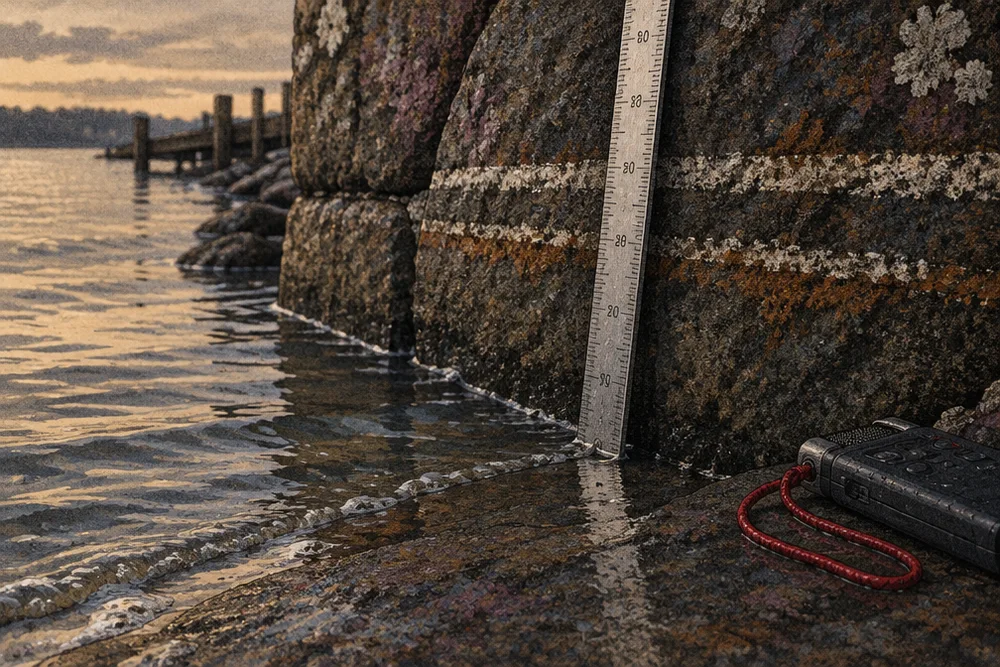
That evening, I found Leda at the landing, checking the old flood marks with a ruler. The light had gone the color of silt, and the waterline moved gently against the lowest stones. She had put her recorder away.