The Return Address Is Tomorrow
Page 186 of 276
Chapters
Nera listened. Beneath the punt’s small noises was a low push, a continual weight pressing through the city’s hulls. She thought of the old woman’s medicine tin, now on its way to a dry loft; of Tali, still at Ropewalk; of the empty tread under the surface. The first run had not made the street safe. It had given those people a place to stand while the water kept coming.
The city shifted around them in layers. At water level, one hull’s curved side reflected another until Nera could not tell which black line belonged to the boat beside them and which belonged to its image. Above, narrow bridges joined decks where people leaned out with poles, lifting loose boards from the water.
They passed the near end of the causeway, its disused ferry post half hidden by the tide. Nera looked at the brass-colored notch marks darkened by age. She could not see her bell from here; it was back with Iven, returned under their signed arrangement once the rescue ended. But she remembered the salt bands on it and the blank gap between them. A crossing needed both ends named.
“You’re thinking about the bell,” Odo said.
“I’m thinking about where the boat comes back to.”
He gave a small grunt. “That’s the right part.”
Nera took the spare painter from its peg and laid it near her hand. At the high stair they would need to bring the punt in close, hold it through the boarding, then cast off before the water tore at the rail again. Odo would read the plate from the boat. Siv would square it at the edge. Tali would steady people. Nera would help keep the sequence intact.
The old ferry pilot had agreed to the second run, but he had not promised that every detail would work. His refusal to promise had left room for them to find the missing parts. Their route now had a return berth, even if the berth was only a temporary platform exposed to the sky.
A current pressed the punt sideways. Odo corrected with the sweep. Nera held the painter clear of her feet and watched the narrow channel ahead.
“There,” Odo said. “High stair next.”
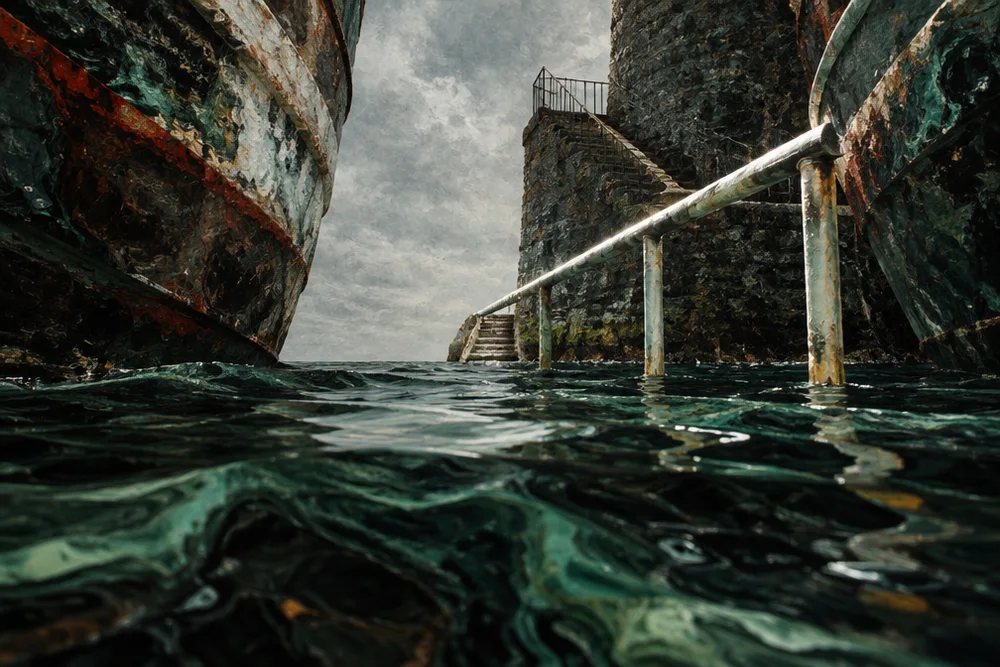
Ropewalk Street appeared in pieces: the upper windows first, then the dark line where the water covered the alley, then the stair tower with its three old sheds joined around one spine. The lower landing was gone beneath the flood. The high stair projected from the side of the tower, its rebuilt rail a narrow, pale line against the wet stone.