The Province Inside the Compass
Page 121 of 212
Chapters
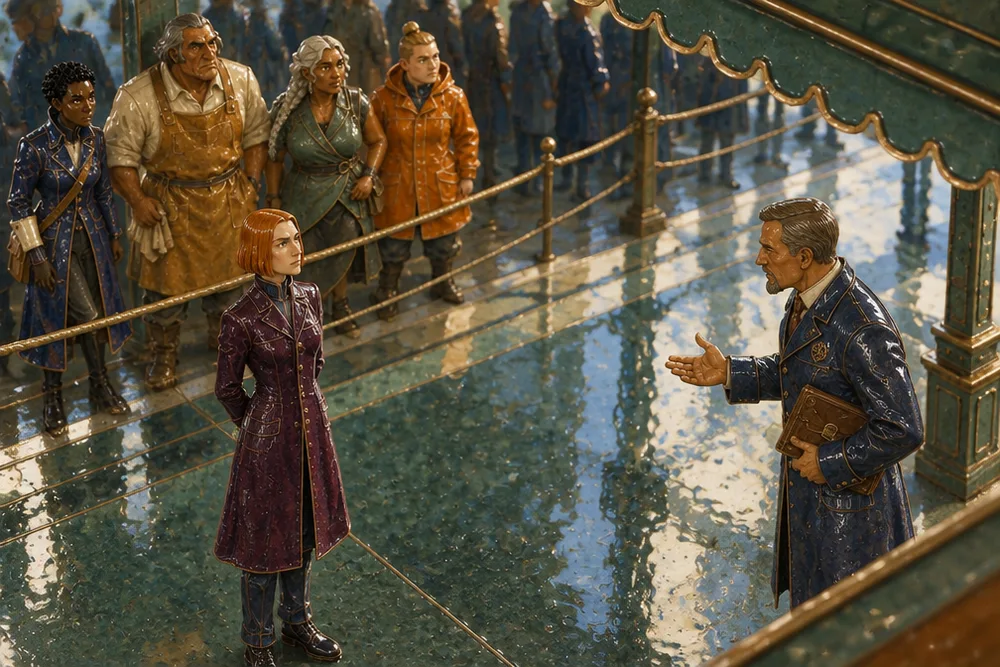
The wind made a low sound under the awning. Along the retaining wall, water slipped through a drain and ran toward the basin. Nell watched the channel, then the settling pond, calculating whether the landing could remain dry through the tide. The pond was rain-fed and shallow, but it lay behind a cracked barrier. She filed that away for the hearing. If the Office tried to use the risk of flooding as grounds to remove the compass, she would need evidence that the landing could be made safe.
At two, Veller brought a written notice for the hearing. It listed the Office’s claim to the brass, Nell’s petition for occupancy, and the independent inspector’s preliminary findings. Beneath those, in a separate line, was a request for the inhabitants to make a statement if they could do so without hazard.
Nell read the sentence twice. The phrasing was dry, almost bloodless. Still, it was a door left ajar.
She clipped the notice to the awning post, beside the order authorizing the case’s presence on the landing. Then she went to the nearest public tap and filled a tin cup. She set it on the stone outside the marked line, not because the people within could reach it, but because the gesture helped her remember that they might be thirsty.
As the sun lowered, the compass’s internal blue became visible again. Nell sat on an upturned coil of rope and watched the case until the first stars appeared. She did not open it. She did not promise herself that tomorrow would succeed. She only promised that, when the hearing began, she would tell the truth as carefully as she knew how.
The hearing began at first light. Veller stood beneath the awning with the Office’s lawyer, a broad man whose polished boots remained precisely on the dry stone. Rusk set out her forms on a folding table. The visitors gathered behind a rope line, quiet now, their faces turned toward the closed case.
Nell gave her account in order. She had inherited the compass among salvage slated for dismantling. She had opened it over the basin, heard a shout, and shut the lid. She had withheld it from the tally. On a later inspection, she had opened it deliberately. The inhabitants had spoken. One had asked for another opening and identified himself as Sia Valmere. An old survey log carried the same name beside a report of a missing operator.
The lawyer asked whether she had a recording.
“No.”
“A photograph?”
“No.”
“Then you are asking this Office to accept that a brass instrument contains a community because you say you heard it.”