The Names Beneath the Needle
Page 63 of 222
Chapters
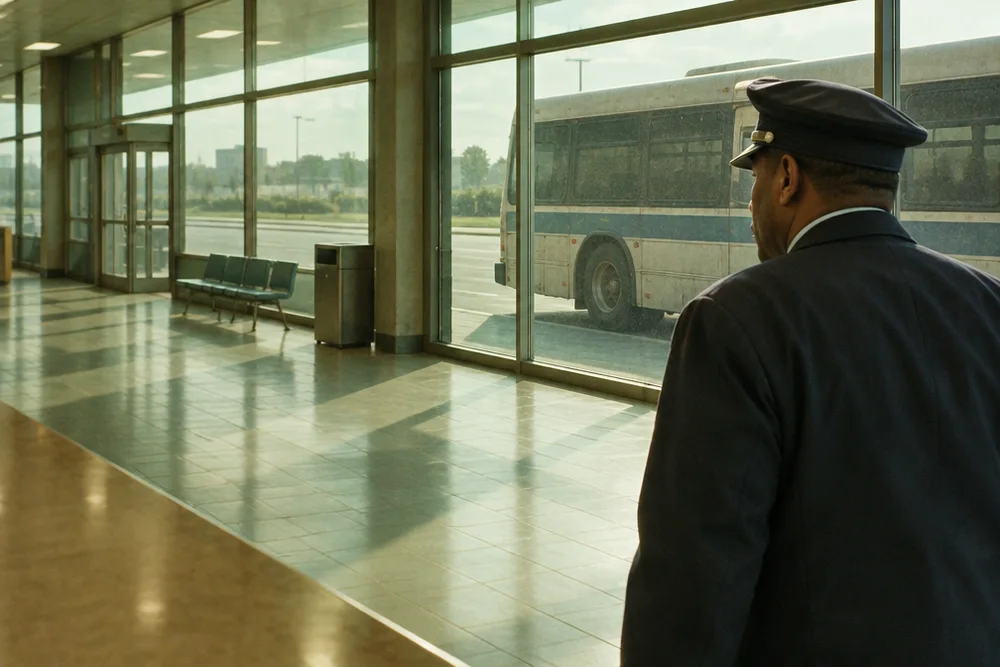
“I’ll come back.” He set the bag on the counter and left the shop and crossed the concourse toward the glass bays, where daylight spread in pale sheets over the tiled floor. A bus idled beyond the glass, its side filmed with road dust. The driver did not look around.
Keziah had not raised her head. “I can get the last sample done by eleven.”
“He needed his trousers at ten.”
“I didn’t know there was a rush.”
“The slip is on the bag.” Quirina turned it face up on the counter. “And it says today.”
Keziah looked at it, then at the revision stack. “I thought you had him for tomorrow.”
“You thought.” Quirina regretted the words even as she said them. Not because they were untrue, but because she could see her daughter already making a place for guilt beside the machine, where it would be no use to either of them.
Keziah reached for the slip. Her fingers stopped just short of it. “I’m sorry.”
“Don’t apologize to me.” Quirina tucked the slip beneath the clear bag. “Apologize to the driver when he comes back.”
“I can finish the job.”
“You can. But the bus won’t wait for it.”
Quirina pulled a folding stool from beside the lockers and sat with the trousers across her knees. The hem had been let down once and shortened again; a ridge of old stitching showed through the navy cloth. She could do that work without the machine. Her fingers knew the way a seam loosened before the thread gave, how to ease a needle under a tight stitch without cutting the fabric.
Behind her, Keziah pressed a button. The electronic machine started its brisk, regulated clatter. Quirina could tell the difference between a thread break and a stop for design adjustment, though she had never learned to enter a name into its screen. The thread break came with a small, sharp pause and Keziah’s breath through her nose. This was the other sound: a run of satin stitching, then the foot lifting, then the short burst of a new letter.
Quirina unpicked the old hem, working from the inside. She did not hurry. Hurrying made holes. A bus sighed somewhere outside, and then the concourse noise filled the gap it left: rolling luggage, a cough, the announcement of a departure no one in the shop needed to hear.