The Names Beneath the Needle
Page 173 of 222
Chapters
A different kind of work might fit somewhere else. She had been turning that possibility over for days without allowing it to become a plan. Alterations at a clothing shop, perhaps. Repairs by appointment. A table at a market. Anything that did not require a machine that could embroider a thousand identical names in a night. But those were fragments, not a forecast, and the terminal wanted a signature before the month was finished.
Quirina came to stand beside her. “You could call the manager and tell him you need another week.”
“He already gave me until the end of the month.”
“Then tell him what changed.”
“There isn’t another contract to point to.”
“You can tell him the truth without the contract.”
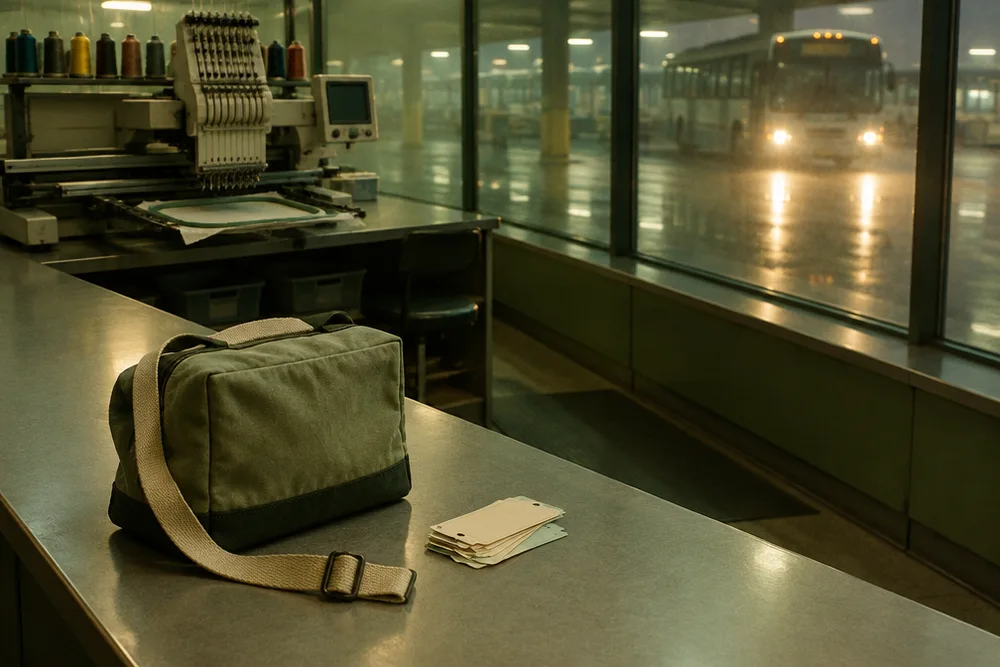
Keziah looked at the shop around them. Thread spools stood in rows behind the counter, colors organized into a sequence Quirina had built over decades. The machine took up most of the rear bench, its large head lowered over an empty hoop. Beneath the racks, the drawer with the old order slips stuck halfway open. She remembered the corrections there, the blunt handwriting and the names that had never entered a spreadsheet. She had wanted those records to prove a pattern. They could not prove what any person had asked or why.
“I don’t want to ask for time I can’t use,” Keziah said.
Her mother rested one broad hand on the back of the counter chair. “That’s fair.”
Keziah pulled the lease letter closer and made a note beside the deadline: no transfer without proof of income. She wrote the next date she would speak with the manager, then closed the folder. It did not solve the problem. It did stop her from acting as if the hospital contract was still on its way.
She turned off the overhead task light and left the concourse glow to fill the shop. Quirina counted the till while Keziah stacked the finished jobs in pickup order. A bus rolled in beyond the glass bays, headlights pale in the evening haze. Travelers emerged in twos and threes, scanning the signs, pulling bags behind them.
“The driver with the lunch bag might come before the late run,” Quirina said. “Leave it by the counter.”
“I will.” Keziah put the bag beside the claim tickets. The repaired strap lay flat, no puckering around the buckle. She had finished it in less than twenty minutes and charged enough to cover materials and a little labor. It was a job the machine could do without imposing a risk on anyone else.