The Moon That Owed Us Rain
Page 80 of 212
Chapters
The dry sequence was complete. The record held two results: Reedstep could answer when the city was isolated; the city collector retook precedence when restored. Neither result had moved a drop of water. Both had changed the shape of the choice.
They shut down the trial unit in the required order. Istra removed the dry-pulse cartridge, wrapped it in its cloth sleeve, and checked the return valve’s wax seal once more. The pressure sensor remained at zero. She signed the equipment log; Sella countersigned beneath her, the two names crowded together on the narrow line.
Tem stayed by the route cabinet, looking at the old beacon branch. “How many of these still answer?”
“We don’t know,” Istra said. “Reedstep’s the first we’ve tested.”
“The others had beacons.”
“Had?” Sella asked.
“Every village that got a landing allotment had one. Most are older than I am. The city’s records call them inactive, which isn’t the same as broken.” Tem tapped the map at three pale marks beyond Reedstep. “The cistern keepers will know which still have someone listening.”
Istra opened her tool case and found the launch warrant. Its folded edge had taken a blue smear from the pressure gauge. Ninewells’ first draw was stated in formal, careful language, with no mention of houses under Latch’s shell, no mention of the village beacons, no mention of what the city trunk did to a small pulse. She put the warrant beside the trial record, not on top of it.
Sella read the two pages. “If this goes to the city hearing, the creditors will ask why the charter order was issued before the routing was checked.”
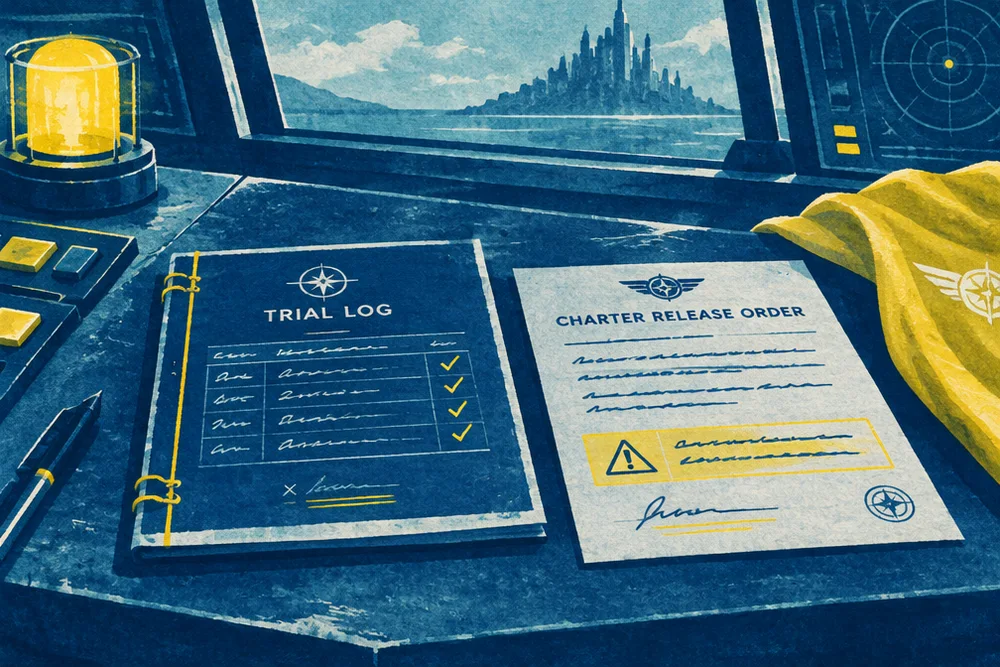
“Because it was always issued that way,” Istra said.
“That doesn’t protect you.”
“I know.” She pressed the papers flat. “Put the readings in the public packet. Both sequences. No interpretation removed.”
Sella looked at the figures, then at Istra. “I can submit a request for the collector key to be reviewed. I can’t promise the council will surrender it.”
“I’m not asking for a promise.”
“You’re asking for a change that will close factories.”
“I’m asking for a route that doesn’t make a village wait behind a city simply because the city’s pipe is wider.” Istra heard the edge in her own voice and kept it there. “The factory cost belongs in the calculation. So does the village’s time without water.”
Sella gathered the authorization and copied readings. “I will take this to the council. They’ll want a design for the low-flow branch, an estimate of the ward supply, and a signed statement that the old collector can be isolated safely.”