The Moon That Owed Us Rain
Page 211 of 212
Chapters
Tem went back toward the landing road with the shell survey tucked under his arm. He had to return to Latch before the next strain check. His gait was steady, but the year had put a new caution in it; he tested the ground at the edge of the puddles before putting his weight down. The residents he passed greeted him by name. None of them asked if the damaged gallery would reopen.
Orri walked with the village keepers as they carried the new queue copy to the cistern. He had moved Reedstep down without making a show of sacrifice. That, Istra thought, was the difficult part of trust: it could not be entered in advance as a virtue. It had to be renewed when a useful advantage was actually within reach.
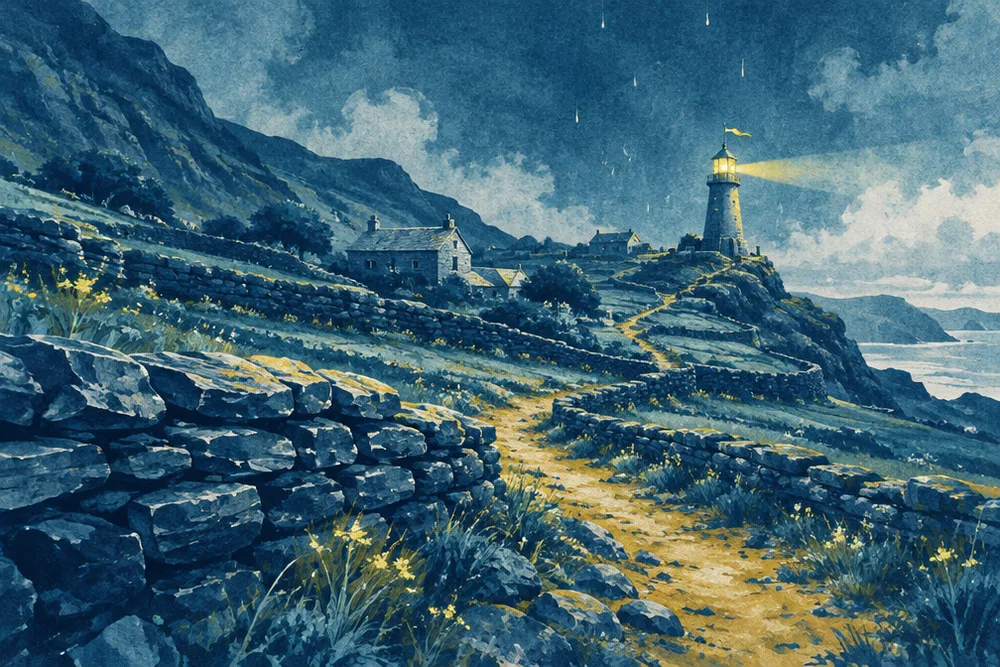
She returned to the beacon house alone. From its window, the marker remained still. Above the dark line of hills, the sky showed no water and no moon. She set her hand on the outer wall. The beacon’s old stone had been heated all day and was cooling beneath her palm.
“Not yet,” she said, though there was no one there to hear it.
She did not mean the rain. The next pulse would come when the orbit and the schedule met, when the gauges allowed it and the receiver answered. She meant the record: not yet complete, not yet clean, not yet finished asking what the water had cost and who was still waiting for it. A year of careful work had not erased the debt. It had given the debt a place to stand where people could see it.
On the board outside, the next village’s name caught the last light. Reedstep stood below it. Ninewells was farther down, no longer first by charter or by the broadness of its collector, but entered among the others according to need. No city, village, or mechanic could claim the rain by right of precedence again. The order could still be argued, challenged, and changed; that was how they meant to keep it honest.
The first pulse of the new cycle was not due until the following day. At dawn, Istra went with the crew to the beacon. She had slept badly in the room behind the cistern house, listening for the familiar upward patter of water that did not come. When morning light reached the valley, a thin mist lay in the low fields. The old landing beacon stood at the edge of the settlement, its metal brackets stained dark by years of dust and rare rain.