The Moon That Owed Us Rain
Page 125 of 212
Chapters
The meeting broke into smaller knots around the table. People came forward to read the conditions, tracing lines with blunt fingertips. A young mechanic asked whether the public readings would include raw gauge values or only Istra’s conclusions. Istra said raw values. A woman from the upper gallery asked where the pause key would live. Tem said it should stay in the resident council room, under two locks held by different people.
“And if the council room floods?” someone asked.
“Then we move it,” Tem said. “We don’t leave it where the water can take it.”
Sella waited until the questions thinned. “I need to know what I carry back,” she said. “The city can recognize permanent occupancy. I can request that language. But the agreement has to give us a workable audit. Deliveries need to be matched against the queue. We need to know which village received what, and whether the hospital’s branch was supplied.”
“You’ll know,” Tem said. “You won’t be permitted to use the information to claim the next pulse.”
“We have never asked for every pulse.”
“The charter says Ninewells draws first.”
“The charter also says the water is held for the drought settlements.” Sella glanced at Istra. “The wording was made before any of us were in office.”
“But you kept it.”
Sella looked down at the paper. For a moment, the white tabard seemed almost luminous against the blue-stained gallery wall. “I kept it because the wards need water, and because the factories support the city. I have not pretended those are the same thing as justice.”
Istra saw in that answer the calculation Sella had brought to every meeting: hospital supply, jobs, creditor penalties, water tolls. None of it disappeared because the system had to change. The city’s first place in line had made every other need look like an afterthought. Giving it up would not make the city weightless; it would make the weight visible.
“The readings can be public,” Istra said. “Every valve opening, every recovery interval, every destination. The resident crew can sign the same log. Your auditors can compare it with the queue.”
“And the city can challenge a discrepancy?”
“Yes. Challenge the record. Not command the mechanism.”
Sella nodded once, as if testing a valve handle. “I can take that distinction to the hearing.”
Tem lifted the draft. “And take this wording. Don’t make it softer on the way.”
“I won’t.”
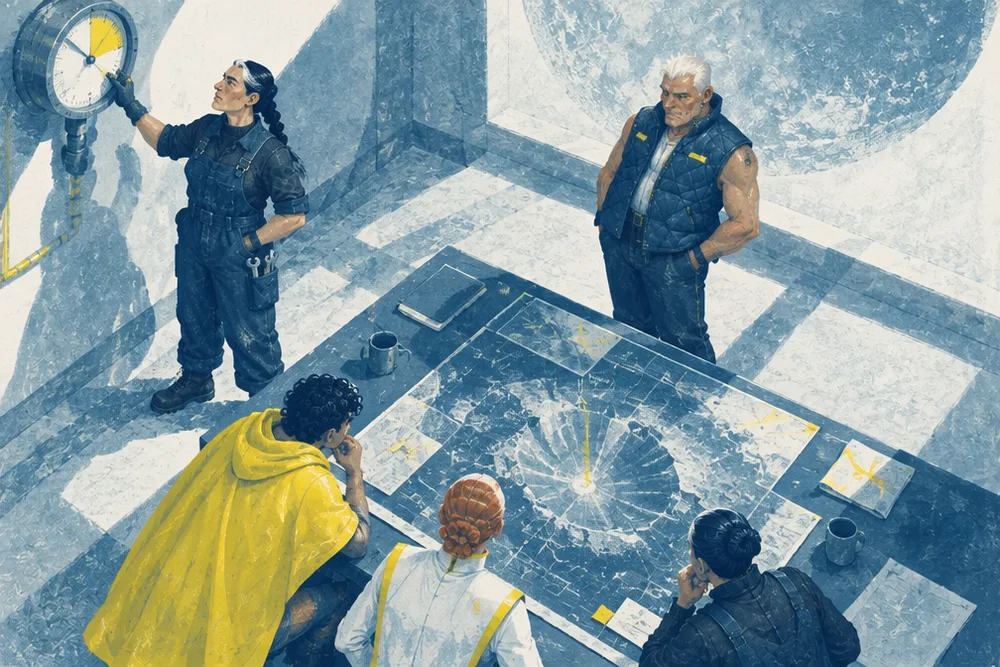
The pump’s rhythm changed, a brief double knock in the pipe behind them. Several heads turned. Istra checked the small pressure dial fixed to the wall, then waited for its needle to settle. It did. No alarm, no strain spike—only the building reminding them that the words had a physical counterpart.