The Moon That Owed Us Rain
Page 118 of 212
Chapters
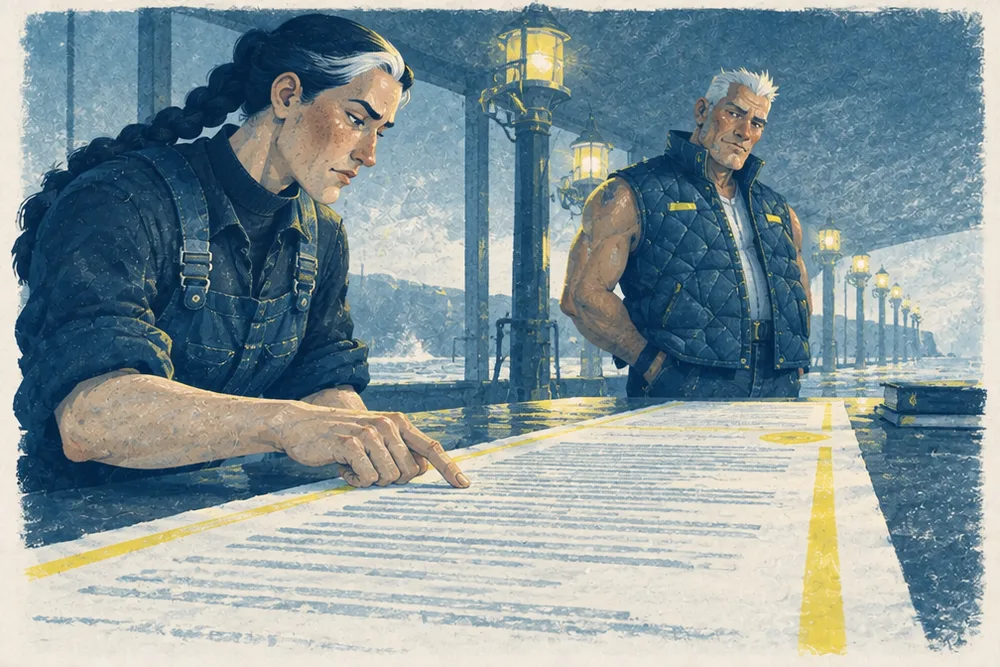
She read the conditions aloud. She kept the words exact. The residents would be asked to accept public delivery audits, recorded receipts, and a shared review of the queue. They would keep the pause key. No auditor could order an unsafe release. The city had agreed to recognize the inhabited galleries as permanent homes and to publish its own water use, including the factory closures and the toll payments promised to workers.
A woman with a patched sleeve asked, “Who chooses the auditors?”
“A joint crew,” Istra said. “One city delegate, one village keeper, and lunar residents chosen by the settlement. The crew can inspect the readings and request a pause. It can’t overrule the gauges.”
“You wrote us out once,” said a young man near the back. “How do we know you won’t decide a family is a bad reading?”
Istra felt the room turn toward her. She could have explained that the certificate had been required, that the inspection had been assigned, that the pressure was low and the diagrams incomplete. Those things were true. They would not make the signature disappear.
“You don’t know because I tell you,” she said. “I signed the vacancy certificate without walking these galleries. I won’t ask you to take my word as proof now. The route, measurements, and disagreements will be visible. You can stop the pulse if the shell strains. And you can remove me from the crew.”
The young man did not nod. He looked down at the paper. “Will you put that in the record?”
“Yes.”
Tem stood near the bay doors, one shoulder against the frame. He did not tell the room what to decide. Istra was grateful for that, though she knew he could have made the case more easily than she could.
They worked through the terms line by line. The first argument came over household counts. Residents wanted the register to distinguish a family’s home from its water claim; counting people could not become a reason to inspect bedrooms or move anyone out of a gallery. Istra added the restriction in ink. The second concerned repair access. A joint crew could see the gauge housing, but entry to occupied rooms required permission except during an immediate rescue.