The Moon That Owed Us Rain
Page 110 of 212
Chapters
A man behind her called, “Let us vote before you trade our pay away.” Others took up the demand. Not all the shouts were angry; some sounded frightened, and that was worse. Istra had heard the same pitch in the occupied galleries, when families asked whether the machine’s survival had any place for their homes.
Sella let the noise crest, then lifted one hand. She did not raise her voice. “You should vote on the bargain. But the current charter does not give the factories a choice. It gives Ninewells precedence over every village because the old collector was built to catch all routed rain. The key is the mechanism that keeps that precedence in force.”
Mera pointed toward the hill. “And if we hand it over?”
“We lose the shared trunk’s first draw. That closes the wet-service line to the factories while the new route is commissioned. It may not reopen for months.”
“May not?” Mera repeated.
“I won’t promise what the pipes cannot guarantee.” Sella glanced at Istra, and the look held no plea for rescue. “I can tell you what I can put in writing.”
The clerk waited, poised to record. Istra could hear the chamber’s ventilation fan ticking once each turn. Outside, the collector dome reflected a strip of white daylight, as if the city still possessed a full tank and only needed to decide who deserved the tap.
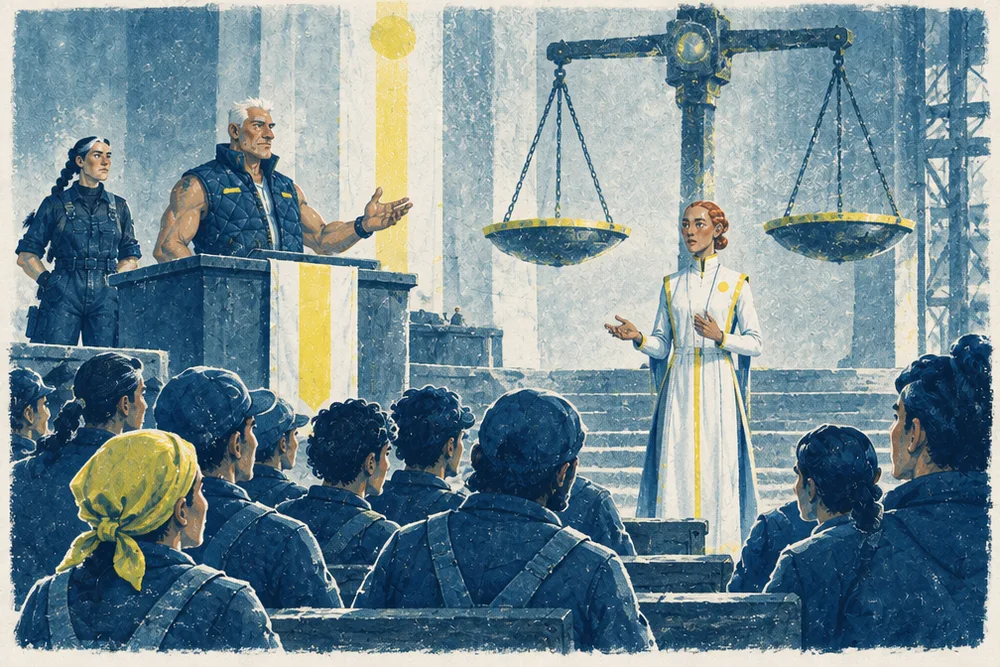
Sella asked the clerk to bring forward the city’s toll ledger. It arrived in a blue folder, its corners softened by years of hands. She opened it to a set of columns marked by neighborhood, amount, and purpose. Water tolls paid by commercial users had accumulated in a reserve intended for pipe repairs. The reserve was not large enough to replace factory wages, but it could keep households from losing rent and food money during the first weeks.
“If the city releases the key,” Sella said, “I will earmark these tolls for temporary wage relief. The payments will go to workers, not owners, and the disbursements will be published every seven days. I will also request a public vote on extending relief from the emergency fund.”
“You can’t pay everybody,” Mera said.
“No. I can offer a bridge, not a substitute for wages.”
A factory steward leaned toward the aisle. “Who decides the bridge ends?”
“The city council, under an open review. If the route fails and the wards lose their supply, the council will have to answer for that too.”