The Laundromat Where Clocks Go Missing
Page 89 of 213
Chapters
“I’m going upstairs,” Vela said.
“Wait,” Kit replied. “Rusk’s in the office.”
“That’s why.”
Kit caught her sleeve. “You wanted the tenants to talk. Ask them first, while he can’t interrupt.”
“He can interrupt whenever he wants.”
“Then make him do it in front of them.”
Vela looked at the service door. The rule was simple: her keys opened the office, but they did not make every choice a good one. She had been afraid of losing the job, afraid of rent, afraid of being named in a story she could not disprove. And because of that fear, she had let Rusk make each private conversation into a test of loyalty. “All right,” she said. “We’ll talk down here.”
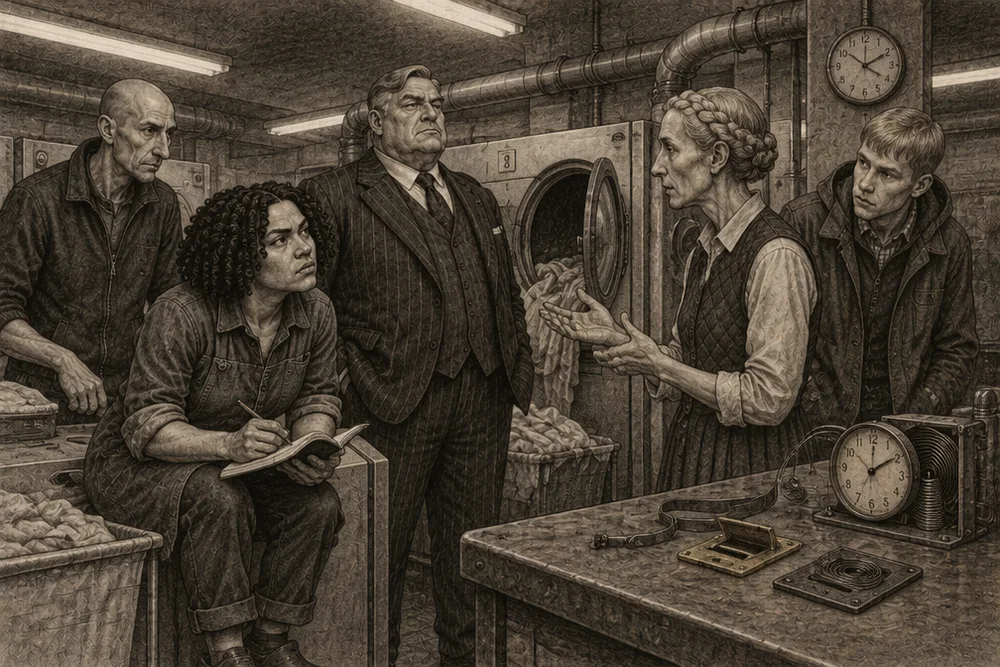
Kit pulled a chair into the center aisle. Vela asked the few remaining customers to stay a minute, explaining that she wanted to record what had happened to any claims or payments they had made. She said they could decline, and that she would not write down a name without permission. The teenager shut the vending machine’s glass with a soft click. A tenant from the upstairs block came in with a basket and stayed by the door.
At first, no one offered anything. The laundromat’s hum seemed louder after the dryers stopped. Vela took out a pocket notebook, but left it closed on her knee. “I’m not asking you to prove the whole history,” she said. “I’m asking what you paid, and who received it.”
A woman in a green scarf spoke first. She had paid rent partly in brass credits left by her father, who had worked the mill’s last year. Rusk accepted them once, then told her the same month was unpaid. She had kept a receipt, but the receipt had been marked as a cash deposit in a separate book. Another tenant said he had handed Ivo an envelope after Rusk refused a credit slip, because Ivo promised to hold it until the dispute was settled. A third said he had not left a clock at all, only a folded note tucked under the lint screen.
“You gave the note to Ivo?” Vela asked.
“I did. He said not to leave paper where Rusk could find it.”
The stories came in fragments, each with a different amount and date, but the same shape: a payment made, a receipt issued or withheld, then a balance that did not match. Two people had left clocks in the dryers after Ivo showed them the missing springs. One had left a stripped clock case without its movement. Another had given him a small paper bearing her grandmother’s flat number and a punch mark like a half-moon.