The Laundromat Where Clocks Go Missing
Page 206 of 213
Chapters
Vela kept a pencil beside the rent book and a separate pad for questions that required more than a quick answer. If someone came to the counter with an old credit claim, she wrote down the name, the date, the supporting document and the person who would follow up. Kit checked the entries against the archive copies once a week. Their system was not elegant. It was legible, and it did not depend on Vela remembering every face after a twelve-hour night.
She learned that people trusted a clear refusal more than a vague promise. When a claim could not be verified, she said what was missing and gave the tenant a written note. When it could, she entered it. The old ledger had been dangerous partly because it made certainty look like a landlord’s possession. The new book had to be open to correction without becoming a blank page anyone could fill however they pleased.
One evening Mara came by to deliver a second statement for the archive. She had found a page in her own records with the dates of the premature cash receipts, written in the margin of a household calendar. The paper was thin and soft with age. Vela gave her an envelope and a deposit form. Mara signed the form, listed the page and its condition, and kept a copy for herself.
“I used to think if I told it straight, people would hear only the signature,” Mara said.
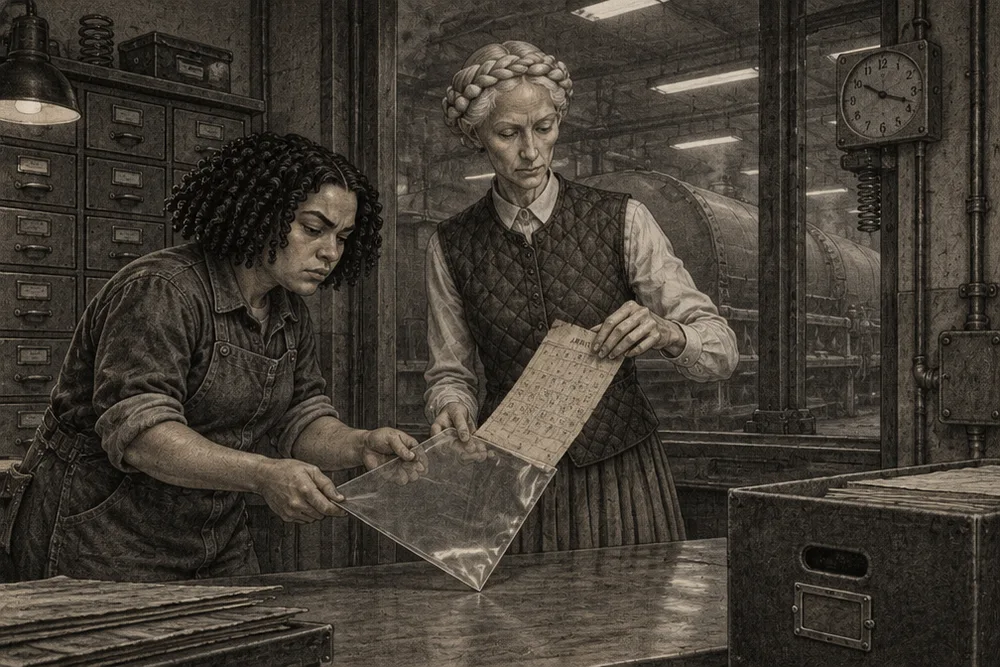
Vela slid the archive copy into a protective sleeve. “They have to hear both.”
Mara studied her, wide-set eyes steady. “And you think they will?”
“They can read both,” Vela said. It was not the same as being heard, and neither pretended it was. But the page would not be separated from her account by a clerk in a hurry or a landlord who wanted a cleaner past. The evidence would remain joined, even when the people who had lived it were gone.
On the walk home, Vela crossed the canal bridge. Selwick Mill stood beyond the water, fenced and dark. The painted-over pay wicket was just visible through a break in the boards, its outline flat against the brick. She could no longer reach the alternate wicket, the drawers, or the room where the loom springs had turned. The conduit was sealed. The clocks could not open it. For months she had feared losing access would mean losing the truth with it.