The Laundromat Where Clocks Go Missing
Page 203 of 213
Chapters
The archivist sealed the boxes and handed Kit the signed deposit receipt. Kit tucked it into a waterproof sleeve. “No one gets to be the only one who knows where it is,” they said. Vela looked past them at the tenants gathering their coats. That, she thought, was the difference between keeping evidence and keeping a secret.
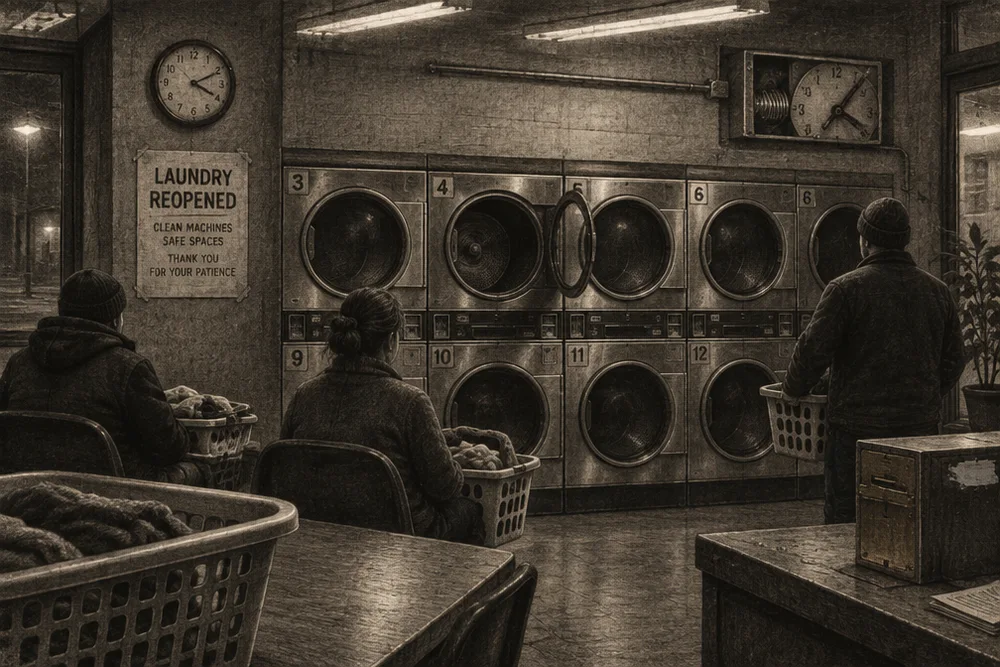
The laundry reopened three weeks later under the trust’s payroll. There had been no grand ribbon, only a new notice on the door, a schedule of elected attendants and a queue of residents carrying baskets on the first Monday morning. Vela was hired for the night shift. The trust paid her by direct deposit, with a printed statement showing hours, rate and deductions. The first time the pay arrived, she studied the figures at her kitchen table until the tea beside her went cold.
The building had changed in small, visible ways. The back-row dryers were still bolted above the sealed conduit, their metal fronts scoured clean. The repair crew had replaced the faulty exhaust duct and patched the laundromat ceiling. A new lock sat on the rent office door, but the office no longer belonged to a landlord. The counter held a trust copy of the rent schedule, a box for tenant receipts and a card stating where to obtain the records stored at the archive.
The conduit had been grouted after the final hearing. The seal was complete: poured through the access point and checked by an inspector, then covered by a plate stamped with the work date. Vela had watched the work from the laundromat doorway. There had been no flash, no sound of something distant closing. Only the scrape of tools and the heavy, wet filling of the pipe. The last opening was gone, as the order required.
There were still clocks in the archive. Some remained with the pay-cage collection; others had been returned to their owners after their drawer numbers were recorded. The clock that had once ticked on Rusk’s desk sat behind glass with its case closed and a note describing its missing balance spring and the loom repair that had held the crossing open. Vela had visited it once. The hands stayed fixed. She had not asked anyone to wind it.
The rent trust had a small room above the laundry for assemblies and bookkeeping. Its front window looked down over the dryer vents, where clean white steam rose in short breaths on cold mornings. Vela did not sit at the old landlord’s desk. She took her turns at the laundromat counter and the trust meetings, and when she handled a rent payment, she wrote a receipt while the person stood there. Copies went into a bound book; another went home with the tenant.