The Laundromat Where Clocks Go Missing
Page 200 of 213
Chapters
Vela had read every page twice. The legal phrases were dry, but the figures were not. They were the sums of people’s wages, the price of patched roofs and failed boilers, the months Kit had spent reconciling receipts, the brass change Mara had been ordered to hold back. When the clerk called the room to order, Vela put both feet flat on the floor. She had spent too long standing ready to flee a room where a landlord was speaking.
The clerk read the terms aloud. The tenant trust would own the block and the converted washhouse collectively, with each household represented in its governing assembly. The trust would maintain the building and the laundry; no individual tenant could sell a share or pledge the block as collateral. A separate repair account would receive the verified overcollections. Refunds would be issued against recorded receipts, and remaining amounts would be credited against arrears only where a tenant chose that option.
A few people shifted at the word arrears. Vela watched old Mrs. Lask lift her chin, then look down at the receipt resting on her lap. She had brought it folded into quarters, the ink fading but still legible. The accounting had found the matching rent-credit entry in the lender’s copy. That was the kind of proof the new trust would have to honor: not a favor from whoever happened to sit behind a counter, but a claim with a record and a witness.
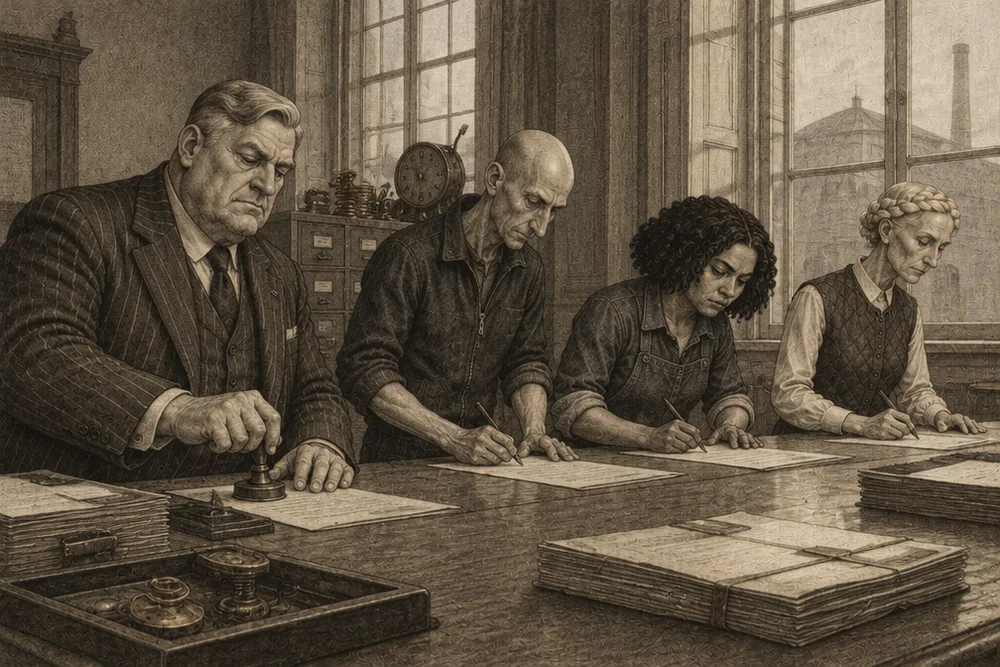
Rusk’s solicitor asked for a clarification about the phrase “verified overcollections.” The clerk turned to the attached schedule. “The sum is subject to the final individual reconciliation,” she said. “The aggregate amount has been established. No claim is rejected solely because it was recorded in brass rather than cash.” Her voice was level, and she did not look toward Rusk when she said it.
That sentence had cost the room months of argument and a strip of paper Vela had carried home inside her shirt. The receipt strip from the pay clerk’s drawer had carried Mara Sedge’s signature, the ledger’s running change total and the pressed trace of her writing through the carbon. It had supported Mara’s testimony that the mill had paid some workers in brass rent credits, that rent could be deducted only at face value, and that excess credit had to be returned in change. The difference was not a decorative mark or an invented coupon. It was money the agreement had required the agent to account for.