The Laundromat Where Clocks Go Missing
Page 185 of 213
Chapters
Kit passed up the witnessed inventory. The officer checked the signatures, then compared several listed sums against the tenant receipts clipped behind it. She said the escrow was relevant only to the requested protection, not evidence that Rusk had taken the money. Vela nodded. She had learned that laying out the boundaries made the evidence harder to dismiss, not easier.
Rusk asked to address the room. The officer let him. He said he had bought a block burdened by bad records and had kept it habitable. He had a mortgage, maintenance bills, insurance, and tenants who paid late. The brass claims, if real, were not cash. The fact that his lender valued a historical line did not make his rent demands unlawful. He said the residents had been given notices only after failing to pay current obligations.
Vela looked at the line on his certification. Collectible. The word did not sound historical.
The hearing officer asked Rusk whether he would agree to hold the sale until an independent accounting was completed. He said he would not agree to an open-ended delay. Asked whether he would suspend the eviction notices, he said the tenants could pay their arrears and remain. The officer pointed out that the amount of those arrears was exactly what the hearing concerned.
“The leases remain in force,” Rusk said. “I have not removed anyone.”
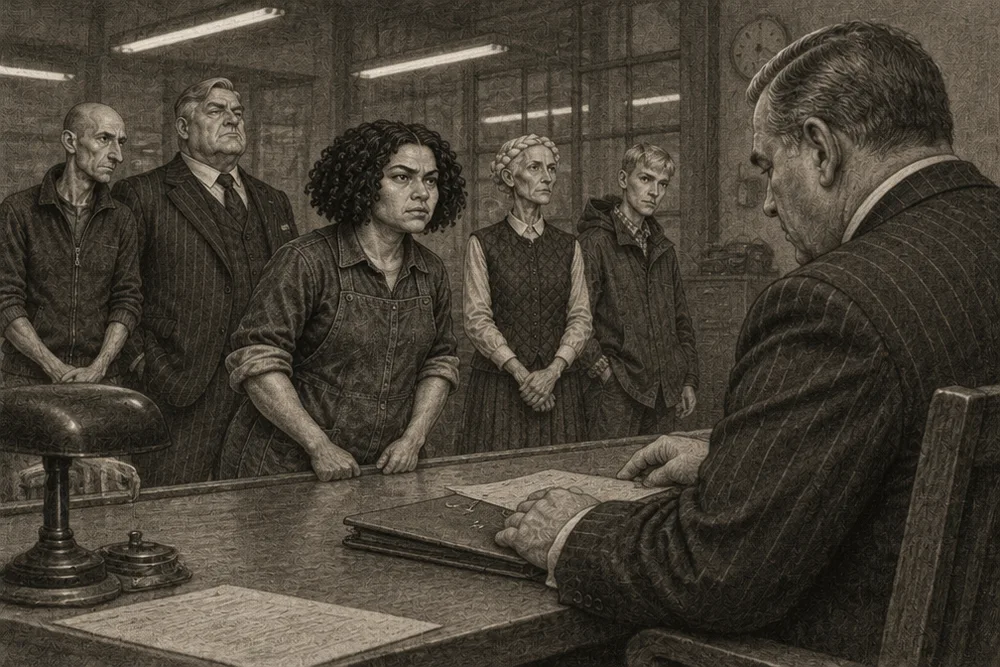
“The notices specify dates,” the officer replied. “A notice can produce an irreversible result before a later accounting reaches it.”
The solicitor said the court should not treat a disputed claim as a proven defense to rent. The officer answered that she was not deciding whether the brass credits extinguished the present rents. She was deciding whether the documents and testimony gave reason to preserve the position long enough to find out.
Her pen moved over the application. Outside, a delivery cart rattled over the courtyard stones. Vela waited with both hands folded under the table. The hearing had become a series of small, deliberate questions, each one refusing to let the argument jump ahead to a conclusion.
The officer asked Mara once more whether the signed strip could be matched to the ledger totals. Mara answered that the strip’s totals corresponded to the carbon schedule; the schedule’s figures could then be compared with the pages Rusk had filed with the lender. She had not made those lender pages. Their source marks and sums matched the worker records she had kept.
“Can you account for every credit?”