The Laundromat Where Clocks Go Missing
Page 179 of 213
Chapters
“You signed the receipts.”
“I have already said so.”
“Then why should the hearing officer believe your present account instead of your signature?”
Mara’s hands parted and came together again. “Because the signature is true. The words around it are not. The slips were prepared before payday. The amounts were entered as wages, but no one handed that money to the workers. They received brass credits on account of the settlement. I should have refused to sign. I did not.”
Vela felt the tenants behind her shift. No triumphant murmur followed. The confession did not make Mara blameless; it made the account harder to dismiss as an invention. She had given the room a reason to doubt her and then put the physical record in reach.
The hearing officer asked about the brass. Mara described the tokens’ stamped faces and the ledger notation used to record them. Workers could present credit at the rent desk. A permitted rent amount could be deducted from the balance. If a credit was worth more than the rent due, the difference had to be returned in brass—not kept as a fee, and not carried away without entry.
“Who was allowed to collect the rent?”
“The agent. At that time, the agent was authorized to take the face amount due. Nothing more.”
“And if a tenant tendered a credit larger than the rent?”
“The excess belonged to the tenant. It had to be returned as change.”
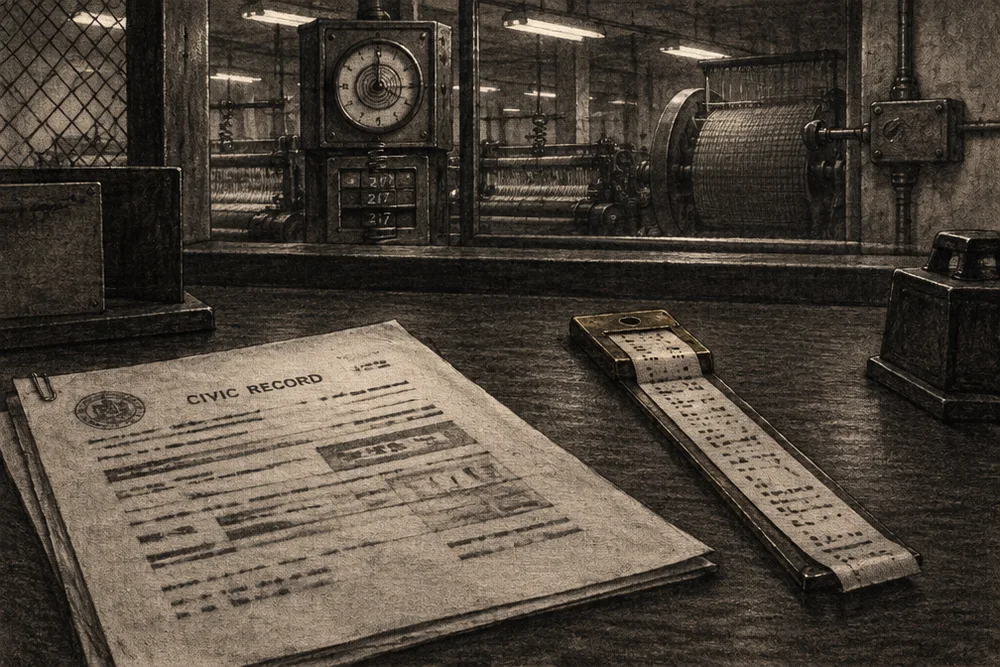
The solicitor said the arrangement sounded informal. Mara answered that the rule was written on the settlement sheet and reflected in the change column. She had kept the receipt strip because she was responsible for reconciling those amounts. Its pinprick marks and narrow boxes were familiar to her even after so many years.
Vela looked at the strip through the sleeve. The tiny repeated figures were what had carried them here: a record small enough to be pocketed, durable enough to contradict a ledger made to look official.
Rusk’s solicitor asked if the brass credits could be exchanged for ordinary money. Mara said there was no general cash redemption. Their value came from what they paid: rent and, under the settlement, the purchase option. The solicitor asked if the workers had ever exercised that option. Mara said the mill’s closure interrupted the process, and the documents she had seen directed that balances be carried forward until the housing transfer was completed.
“So the purchase was never completed,” the solicitor said.
“Not in the records I held.”
“And you cannot tell us who owns the flats today.”