The Laundromat Where Clocks Go Missing
Page 167 of 213
Chapters
The clerk returned with a buff folder and a pair of cotton gloves. She laid the folder on the counter and turned it so Kit could read the cover. The sale packet had been lodged with the lender’s security filing and included the rent schedule Rusk had used to support the block’s valuation. Its pages were numbered, stamped, and bound with a metal fastener. No one could remove a sheet without leaving a trace.
Kit checked the file number, then asked permission to examine the schedule. The clerk directed them to the public table and set a copy request form beside the folder. Vela followed, the receipt strip’s envelope brushing her wrist with every step. For a moment she wanted to rush the pages, to turn them all and find whatever proved Rusk had lied. Instead she waited while Kit checked the filing order and the clerk recorded the time.
The rent schedule began with the ordinary flats: number, named tenant, monthly amount, arrears. Vela recognized some names from the laundry and some from the tenant ledger she had copied earlier. A second column carried figures that did not match the posted balances. Those were the brass credits, brought forward as assets in Rusk’s certification, though the current roll treated Selwick Mill’s workers as cash-paid and the housing as privately rented.
Kit pointed to the lines. “This isn’t the missing book. It’s what he represented to the lender.” He placed a sheet of transparent copy paper over the schedule, careful not to press the pencil hard enough to damage the filed original. The clerk watched him make the request and gave a small nod when he reached the printed amount.
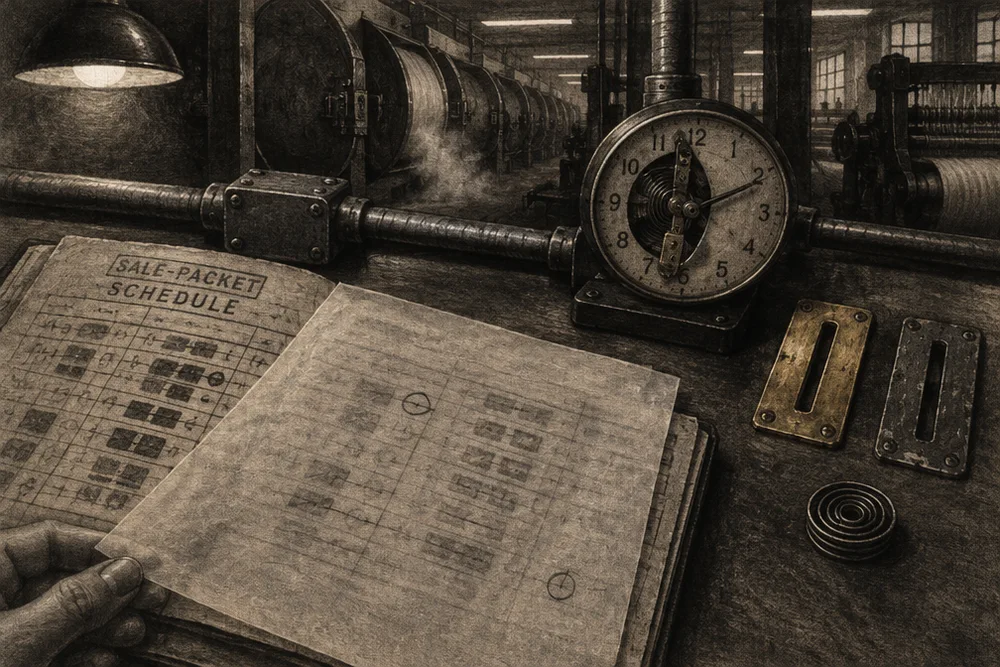
Vela searched for the entry she remembered: the same flat marked as paid in brass under one account and overdue in cash under the other. It appeared on the page as a cross-reference and a balance. The amount did not establish who had actually delivered money. It did establish that Rusk had not invented the brass figures after Ivo began holding envelopes. He had used the figures when asking for credit against the property.
“He made the balances collectible,” Kit said. “That’s what this says. He certified them as assets.”
“And billed the tenants in cash.”
“Yes. But the page doesn’t tell us whether he believed both accounts were valid, or whether he knew they could never both be collected.” Kit’s pencil paused over a line. “We’ll need the signed strip and Mara’s testimony. The packet helps connect his own books to the old settlement. It doesn’t replace the clerk who handled it.”