The Laundromat Where Clocks Go Missing
Page 119 of 213
Chapters
The tenants entered. Vela and Ivo went to the back row while Rusk stayed near the front counter. The sealed conduit ran beneath the machines in a low, boxed channel. Dust gathered along its seams. The dryer they needed had a dent over its lower hinge and a red inspection tag tied to the handle—dated eight months earlier, the tag said, with no failure mark. Vela showed it to Kit, who recorded the details.
“The tag doesn’t certify the conduit,” Kit said, “but it does show the machine wasn’t condemned.”
“We’re not turning it,” Rusk said.
“Then call the inspector,” Vela replied.
Rusk’s hand closed around the key ring. “You’re trying to make me responsible for your trespass.”
“We’re asking you to operate your own machine.”
For several seconds, only the fluorescent tubes made noise. Then Rusk stepped to the wall switch. He glanced at the gathered tenants, at Kit’s recorder, at the dated tag. He turned the dryer on.
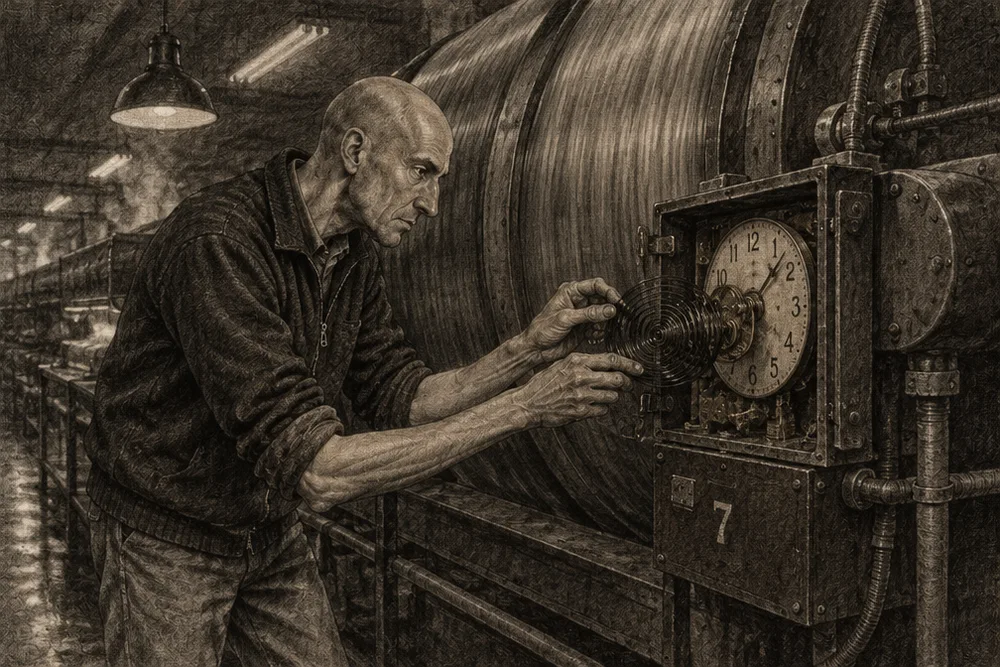
The drum began with a low, steady rumble. Vela felt the vibration through the rubber soles of her clogs. It was not the heavy shudder of a damaged machine; it was an even turn, gathering speed. The conduit gave a faint ticking sound beneath it, as though something inside had answered.
Ivo set the square clock on the dryer lid and fitted the loom spring into the exposed slot. His hands were long and precise. He pressed the curled end into place and eased the case shut without pinching the mechanism.
“When the second hand reaches the mark,” he said, “we go.”
Vela watched the face. The minute hand trembled toward the two. She looked once at the people behind her, then at Rusk. His chin remained raised, but his polished boots had moved back from the machine.
At 2:17, the clock’s thin hand jumped. The dryer’s rumble deepened; a breath of warm air slid from the seam beneath it, carrying the dry, dusty smell of wool and old machine oil. The outline of the laundromat changed without shifting. The harsh fluorescent glare flattened into a smaller pool of light, and the dented lid beneath the clock seemed to acquire the weight of another machine’s years.
“Now,” Ivo said.
Vela stepped through the narrow space beside the drum. For an instant she saw both rooms at once: the present laundromat’s tiled wall and the mill’s brickwork behind it, their edges overlapping like two imperfect sheets. Then the laundromat was gone from her sight. She stood in a low service passage under the old works, lit by a lamp in a metal cage. The floor was gritty with lint and fine black dust. Somewhere beyond the wall, looms struck a slow, heavy rhythm.