The Laundromat Where Clocks Go Missing
Page 103 of 213
Chapters
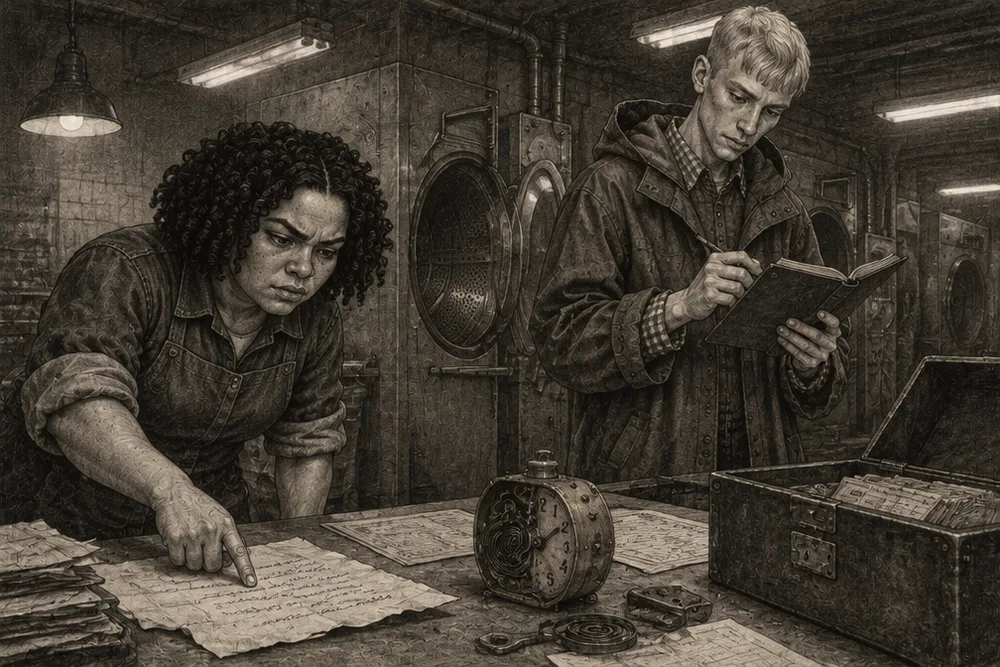
“He says a lot.” Ivo unlatched the box. Inside lay a set of paper lists, each marked with a tenant number, date, and amount. At the bottom were small envelope stubs, some bearing initials. He did not reveal the location of the envelopes themselves. “I kept an inventory. You can inspect it here. You can copy it in front of witnesses.”
Kit sat at the desk. “We’ll need the tenants to verify their names and amounts.”
“They can.”
“And if your records don’t match their receipts?”
“Then write down that they don’t match.” Ivo folded his elbows close. “I won’t ask you to call me honest because I look quiet.”
Vela took the chair opposite him. It wobbled on the uneven floor, and she steadied it with one rubber clog. “Did you take the desk clock?”
“No.”
“Did you take those envelopes downstairs?”
“Yes.”
“Why?”
“The tenants were afraid the office would swallow them. Some had paid twice already. I told them I would hold their next deposits until the ledger acknowledged the first.” His voice stayed level, but his thumb pressed a pale crescent into the paper list. “I was wrong to move them without a signed receipt from Rusk. I did have the tenants’ instructions. I have their stubs.”
“You should have told me,” Vela said.
“I did tell you the deposits were being held.”
“You said you had them safe. You didn’t say the office would call it theft.”
“I thought the notice was still posted.” He looked at Kit. “It was taken down.”
“We have no copy,” Kit said. “Do you?”
Ivo removed a folded sheet from the box. The paper bore the same uneven type as the laundromat notice board: TENANT DEPOSIT ESCROW, with a date and a list of names. At the bottom, a thumbprint of blue ink marked where it had been pinned. Vela recognized the handwriting beneath the typed line as her own. She had written the notice and set it beside the office door on the night Rusk ordered her to clear the board.
She remembered the notice being gone the following shift. She remembered Rusk saying it was “not appropriate.” She had let herself think he had put it in a drawer. The office had always held more paper than she could count; she had not asked where anything went.
“I saw this,” she said.
“You wrote the list.”
“I wrote the heading and the date. You gave me the names.”
“And you watched me take the envelopes.”