The Last Room for Fog
Chapter 6 · Two Chairs on the Apron
Page 46 of 220
Chapters
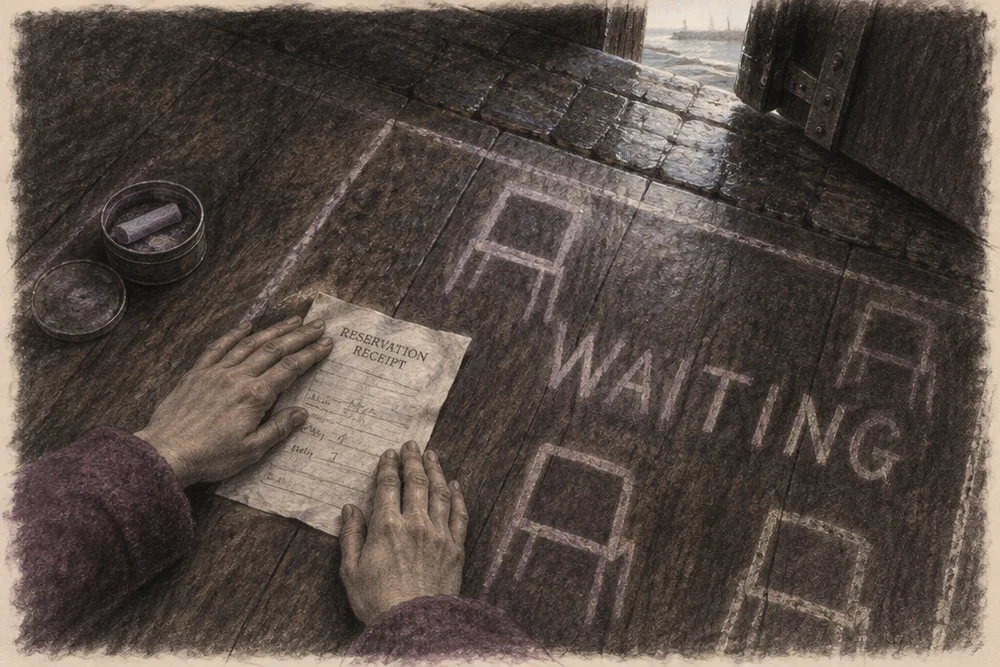
The reservation receipt had gone soft at the fold in Bess’s pocket. She took it out on the North Engine House floor and flattened it against her brass folding rule: two steam tables, a stack of washable plates, serving pans, and a warming cabinet, all held for her until the end of the month. The deposit was refundable until then. After that, the seller would keep it whether Bess had a room to use the equipment in or not.
The sprung boards gave a small answering shiver under her heel. On the inland wall, Jory’s piano stood where it had stood through the trial, lid shut, a cloth over the keys. The dead horn pipe above it was capped, as always. Bess had brought chalk, a tape, and a plan made to the dimensions she had measured before the trial began. On paper, the room had enough floor for supper tables, a service station, and a dance area, provided everyone sat precisely where she put them.
She laid the plan on the floor and weighted its corners with the reservation receipt and a tin of chalk. The building smelled of damp brick, old wood, and the faint oil she still put on the seaward door hinges every spring. Through that door lay the narrow west apron, exposed to the harbor weather and counted by the board as part of the exit route. Bess had not drawn it as a place to serve from. She had drawn it as a place for people to wait while she turned tables inside.
That distinction looked neat in ink. It was less neat when she set two chairs at the edge of her chalked dining area. The first went inside the room, just clear of the service line. For the second, she had to step through the seaward door and place it on the apron. She stood back. The chair’s front legs were still on the bricks; its back legs were nearly against the wall. Two people waiting there would be out of the rain only if the wind happened to be kind.
Bess crouched and moved the chair an inch. Her rule clicked shut. She could fit a narrow serving shelf inside, if she gave up another place at a table. She could not make the apron wider by drawing it differently. Still, she marked the chair positions in chalk, then wrote WAITING on the plan. A room’s problems were easier to look at when they had a label.