The Last Room for Fog
Page 208 of 220
Chapters
She put the forecast beside the posted budget and checked the totals. The numbers did not promise a quick recovery. They showed what had been spent and what remained. One Saturday’s receipts had covered its direct costs; another would need to be measured when it happened. There would be no clever wording that could turn uncertainty into profit.
Bess set a cup of water beside the piano for whoever was on the next lesson shift, then took it away when she remembered that the room did not need her to set out every cup. The member on duty had a list. She could ask them to do it if it mattered to the lesson. It did not matter enough for Bess to make a ritual out of it.
She checked the main door, the latch, and the marked exit aisle. The chairs were set back from the route. The west apron remained clear, its surface damp from the fog but unobstructed. There was no service queue out there, no spare furniture to creep over the line. The building’s rules were still real even on a day without a crowd.
At the end of the hall, she paused by the piano. She had once imagined the room as a business she would own, a set of tables and bookings that could keep her from having to leave again. What it had become was less tidy and more useful: a place whose opening depended on named hours, shared decisions, and the ability to say no to a price or a shift that would quietly consume the person in charge.
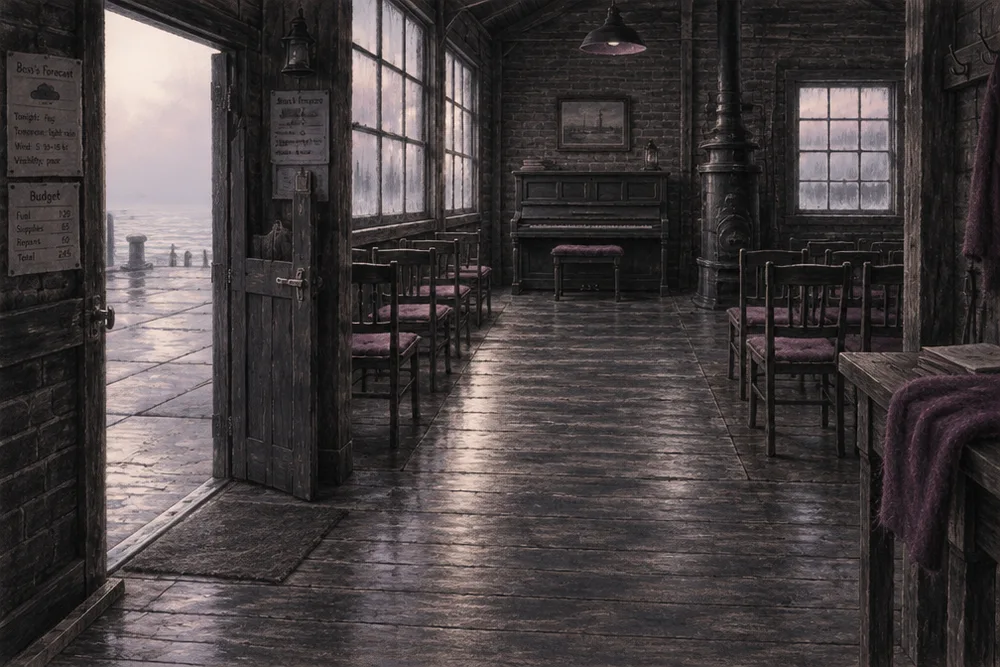
The thought did not make her regret returning. It steadied the fact of it. She had a paid job at the ferry canteen on two weekdays. She had a manager’s wage written into the hall contract, with a renewal rule that did not treat her savings as automatic collateral. She could stay without making the building her only way to stay.
From the desk, she heard the door open and someone call that the lesson group had arrived. Bess looked toward the sound, then let the member on duty answer first.
The Tuesday group assembled as usual. A young ferry worker came in with damp cuffs and a paper cup, looked at the registration sheet, and found their name. Kitto arrived a few minutes later, punch card in his pocket, shoulders still carrying the day’s work. He put his coat on a hook and took his place without asking whether the canceled Saturday had changed anything.