The Last Room for Fog
Page 196 of 220
Chapters
Bess noticed him looking. “We can stay a while.”
“I was checking the time, not trying to leave.”
“I didn’t say you were.”
“I know. I wanted to be clear.”
“You don’t have to explain every movement.”
“I’m learning that, too.”
She folded her napkin once, then unfolded it. “The lease is signed. That’s good. It doesn’t mean the hall is safe forever.”
“No.”
“Or that it’ll work every month.”
“No.”
“I don’t want to make you responsible for whether it works.”
“You won’t.”
“And I don’t want you to make me responsible for whether you’re happy.”
He considered that. “I don’t think I have.”
“You have, sometimes. Not on purpose.”
“All right.”
She held his gaze. “I’m telling you because I want this to be honest, not because I think you’ve done something unforgivable.”
“I hear you.”
The answer was small, and he meant to leave it small. He had often made a confession into an invitation for absolution, setting his regret down in front of someone else and waiting for them to lift it. Bess was not asking to carry anything. He could be sorry and still do the work of changing; she could tell him what she wanted without needing to soothe him afterward.
“I don’t want to make your life smaller,” he said.
“Then don’t.”
She said it gently, but she did not take it back. He felt the boundary as a kindness, the sort that made room for both of them rather than asking either one to disappear.
“I won’t,” he said.
Their plates were cleared. The waiter asked if they wanted anything else. Bess looked at Jory before answering, a glance that included him without asking him to decide for her.
“Coffee,” she said. “And whatever the pudding is tonight.”
“Pudding for me, too,” Jory said.
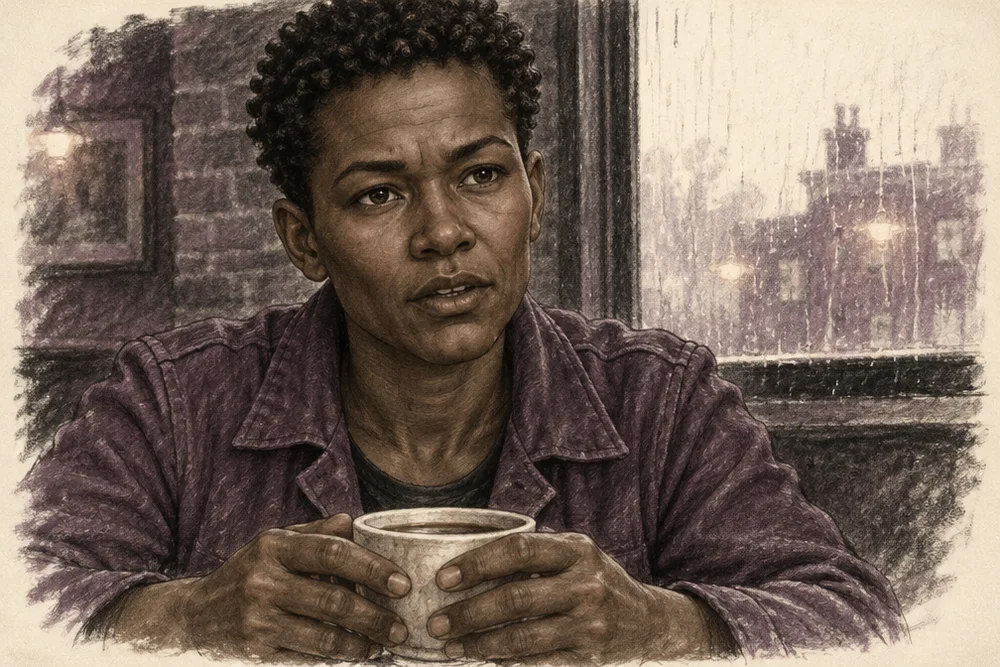
The waiter smiled and carried away the dishes. Through the window, the lane had emptied. Rain still shone on the stones, and a lamp at the corner made a pale oval on the pavement. Jory’s coat remained where he had left it, the notebook tucked inside. He could almost feel its squared pages against the lining. He did not go and get it.
“I used to think you could tell how a place was doing by whether people stayed after the work was finished,” he said.
“That sounds like something you’d count.”
“I would have counted it.”
“And what did you decide?”
“That if they stayed, I had to keep giving them a reason.”
Bess turned her coffee cup slowly between her hands. “I used to think that if I had to leave a place, it meant I hadn’t made enough of it mine.”