The Last Crossing Is Free
Page 223 of 226
Chapters
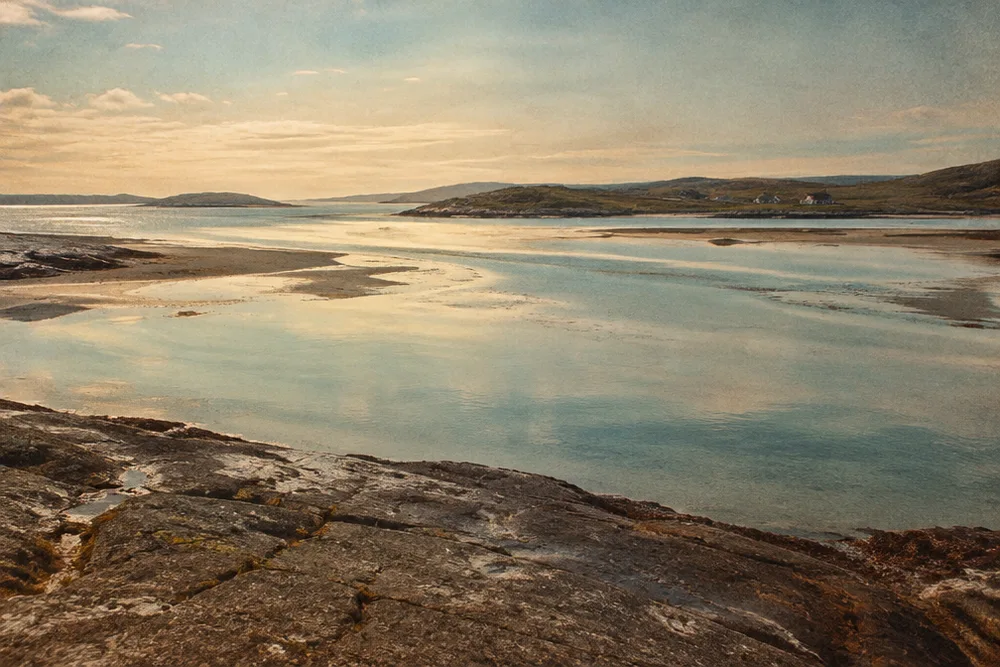
The tide was nearing its turn. Jessa walked to the edge of Meal Step and looked across toward the outer islands. The surface held a pale sky in broken strips; farther out, the channels deepened to bruised cyan. She could not see the six cottages from here. They were hidden by the folds of Lorn and the bend of the shore, though she knew exactly where each roof stood now.
Bram arrived on the far side of the apron. His long navy coat moved in the wind, hands pocketed, white forelock lifting above his brow. He carried no freight book this time. He stopped at the board and read the route from top to bottom, as a passenger rather than its keeper.
“Tomorrow’s passage is ordinary fare,” Jessa said.
“I saw.”
“If you’re going to Needle Quay, you can board at the posted time.”
“That’s my plan.” He slid a coin into the fare slot beneath the schedule. “I’ve spent too long arranging journeys that happened without anyone writing them down.”
“You wrote some down.”
“In a book no surveyor saw.” He looked toward the water. “The old relay route kept people supplied. It also kept them out of sight. I thought I could choose which part of that mattered.”
Jessa leaned one elbow on the board’s stone ledge. “You can’t keep a route safe by making it invisible to the people who decide where boats go.”
“I know.” Bram’s voice was quiet but not thin. “The corrected record belongs to them now.”
A gust lifted the edge of the paper inside the cover. Jessa pressed it flat. “The corrected record belongs to whoever has to use it. They can amend it when the shore changes.”
He gave a small nod. “Then I’ll take the passage and pay the fare.”
“I’ll see you aboard.”
Bram turned toward the town. His coat never touched Jessa’s shoulder; neither of them made a gesture that would turn the exchange into a reconciliation they had not earned. The ferry would carry him in the morning, and if the weather held, it would go on to Sedge End after its booked stop at the market. Every leg had a time and an account. None was guaranteed against the sea. The point was that the people who depended on it could see what had been promised, what it cost, and what would happen if the route failed.