The House That Kept Winter
Page 5 of 8
By the time the cook banked his fire that first morning, Hannah had sold five more buns to people who hadn’t been going anywhere. She carried the last good one up the hill under her shawl. At the icehouse door she stopped, ate it in four bites, and waited until her hands no longer felt warm before she went in.
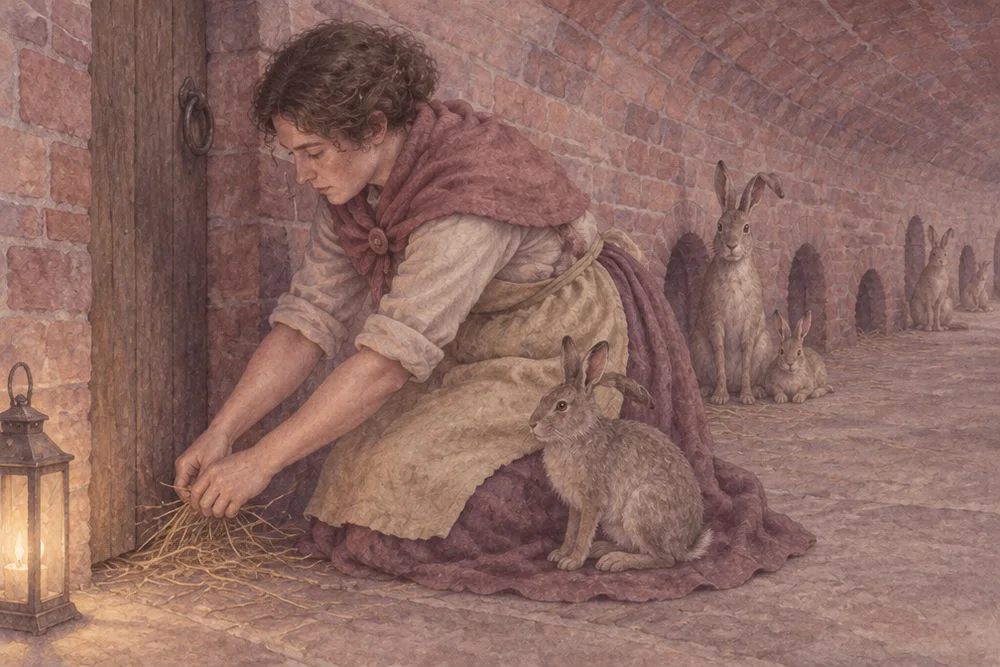
The hares had got into the straw again. This time she could see their tunnels: round openings spaced at intervals along the curve of the wall. The bent-eared hare came out and stood upright. Behind it, the small one stretched a forefoot. In the lantern light Hannah could see four toes, each separate and white.
She looked in at the pond on her way home. A moorhen stepped down from a reed stem, and the water took its weight without so much as a rim of ice to crack. There would be no going tonight.
The next morning Hannah brought the cook a penny before he had rung his first bell. She had brought a smaller bowl, too, and had pressed the rounds at home. The top two stuck together in the basket. She pulled them loose, patched the holes with a pinch of dough, and found that the patched places crisped first. After that, when she pressed the rounds, she put a little dent in each with her thumb. Customers learned to split them there.
The ferry girl came back on the third morning. She bought one bun and asked for two papers, because she had a long walk after the crossing and wanted to save half. When she came again the following week, she bought two. Hannah began to set them on the iron when she saw the reed basket coming down the hill.
Every evening she went to the pond. Every evening she came back to the icehouse and put her palm on the brick. The hares made little scurrying sounds when she moved the lantern, but by the end of three weeks they no longer hid. Once, while she knelt to replace a twist of straw in the door crack, a hare hopped onto the hem of her skirt and sat there until she needed to stand.
Then a warm wind came off the river. All afternoon it drove the pond water into slaps against the bank. At dusk the rain began.