The Hours We Kept Quiet
Page 283 of 298
Chapters
“That stamp is for us to know where the jacket went,” Iven said. “It’s not the time the worker brought it in.” She pushed the blank strip toward him. “Leave their figures alone. There’s room to write in the margin.”
The clerk wrote the docket number down the side of the strip. It took him two tries to fit the last digit without crossing the rule. Beneath it he started to write the time from Iven’s jacket, then looked up.
“When did she come in?”
Jory didn’t know the minute. Mara had been at the counter when the freight line called for the empty cage; he remembered the clerk reaching behind her papers to turn down the speaker. He went back through the line book until he found the call. There was a little hooked mark beside it where he’d tested a pen that was running dry.
“Before this,” he said, and laid the book open.
The clerk looked at the entry. “I’d have said later.”
He wrote BEFORE beside the time rather than putting down a minute none of them knew. Then he sanded the margin, shook the grains into his palm and handed the strip to Iven. It still showed no waiting pay. With the docket number next to it, the white space looked less like an answer.
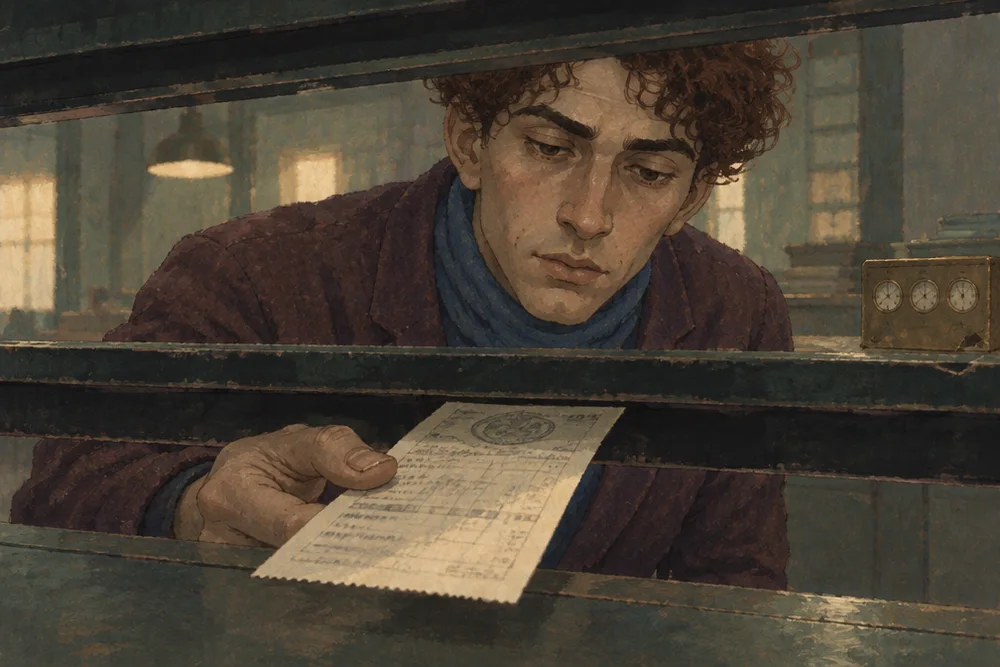
Jory carried the sealed jacket down to the payroll hatch. The shutter had been lowered to the height of his wrist. He slid the jacket through and held on to his end until a hand took the other. The stamp came down out of sight. A moment later a receipt edged back through the slot, its corner warm where the payroll clerk had held it.
Upstairs, the delegate retrieved her tube. Iven lifted the receipt to read it, then set it on the sideways blotter. Nothing on it said that the three statements were wrong. It said there were three of them, who had sent them, and which office had them now.
Jory reached for the hook, then remembered the roster was still on the shelf. The name had dried. He hung it where it could be read from the counter without leaning through the opening. From there he could just see the top of the receipt beside the receiver. The next clerk wouldn’t have to lift the glass to find it.
The correction took longer than the argument. Payroll had to reopen the three statements, compare them against the transfer records, and issue revised copies. Jory relayed each confirmation over the office line, pausing between them while the clerk checked the figures. No one tried to shorten the process by calling the delay trivial.