The Hours We Kept Quiet
Page 244 of 298
Chapters
They counted the relay again, from the first bell to the final return. When the intervals matched, Jory marked the result on the official dispatch slip. There was no reason to pretend that the second test had happened inside the city’s minute. The record said plainly: counted after dispatch, using the muster bell at both ends.
Iven read the entry. “This gives us a usable anchor.”
“It gives us a way to start,” Jory said. “The departures still have to be set by the people who use them.”
“And the boards?” Fara asked.
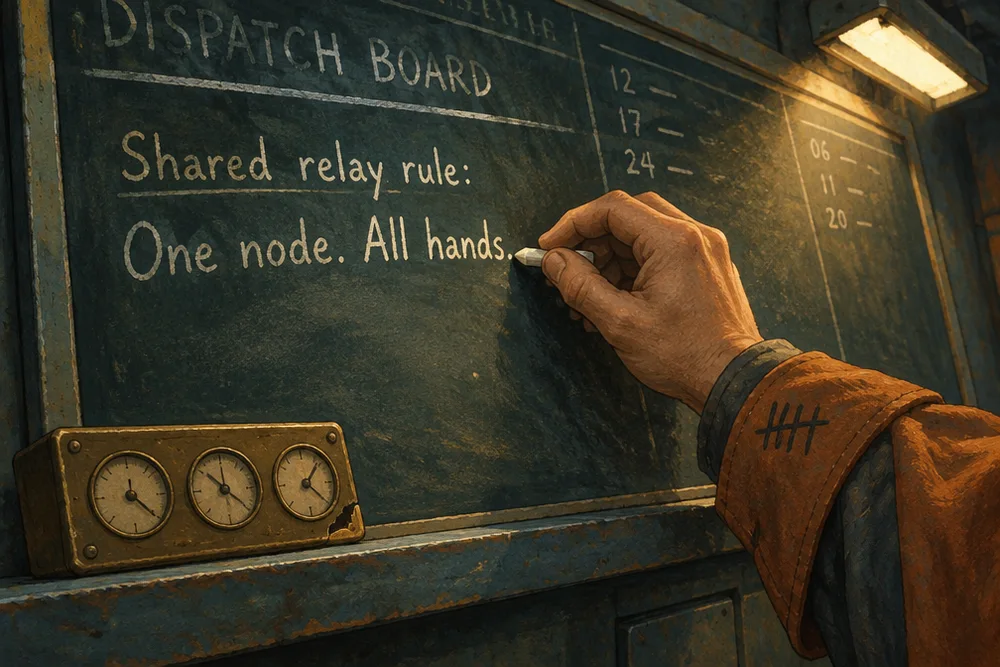
Iven picked up her grease pencil. “Both boards post the same count. Any change has to be sent on the relay and acknowledged. No silent alteration on the city side.”
The clerk looked uneasy. “That’s slower than changing the dispatch sheet.”
“Then the sheet can wait for an answer,” Iven said. She did not raise her voice. Her feet stayed planted wide beside the board. “A schedule that one side cannot hear is not a shared schedule.”
Jory listened to the line while they wrote. The kitchen sounded distant and close at once, a shallow murmur carried across an immense absence. He imagined Eska’s dented strainer on the table, where it always seemed to be, and the others crowded around with their own demands: meal times, crossings, children’s lessons, a place for the displaced households to sleep. They would not all want the same departure.
That was the point. A reliable relay would not make the disagreement disappear. It would let them hear one another before the cage moved.
“I’m going to put the count up,” he told Eska.
“Put the count up,” she said. “Not your name in front of it.”
He looked at the dispatch form. His name belonged on the technical entry, not above the district’s decision. He signed the test result, then left the speaker line blank.
The city board was a slate panel bolted beside the clock weight. It listed departures in the city’s common measure: stop, restart, freight, passenger. Jory erased the old pencil marks for the experimental relay and wrote a new heading, using the same block letters he used for line faults.
MUSTER BELL COUNT.
Under it he entered the confirmed relay sequence and the time of the next dispatch run. He did not write “Jory’s signal,” though that was what the clerk suggested. The bell was Eska’s; the count belonged to both sides.