The Hours We Kept Quiet
Page 224 of 298
Chapters
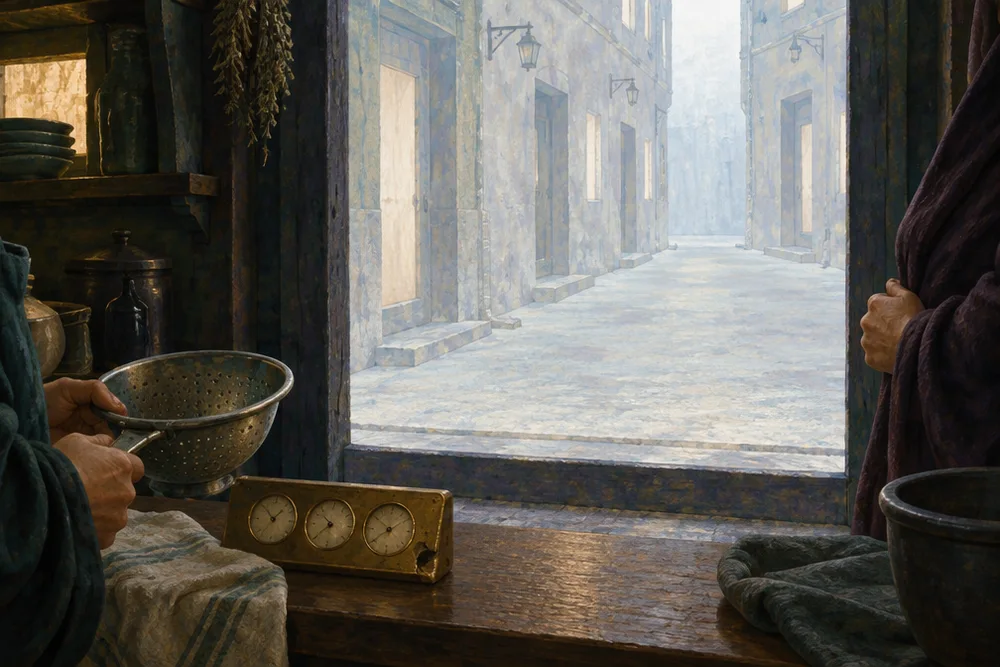
The old man did not look grateful. He leaned on his cane and stared down the passage, listening. When the neighbor appeared, she had a basket hooked over one elbow and a string of keys in her other hand. She had not brought furniture. Eska wondered whether the keys belonged to doors that would soon be gone.
The woman came through at her own pace. At the threshold she looked down at the chalk line on the floor and stepped over it carefully, as if it were an actual crack.
“The bells are a good idea,” she said.
Eska touched the bell above them. “I took it from the school.”
“Then it’s still teaching us something.” The woman kept walking, keys chiming softly.
Nell called the next household. The remaining roster was short enough to fit on one oven board, and the times left beneath it were short enough to make Eska’s stomach feel hollow. The outer lane’s doors had begun to lose their edges. Nobody went back for anything.
The last household on the board had four people and a single bundle of clothes. They came in a line, each with a hand on the shoulder ahead. At the threshold, the youngest stopped and looked past Eska into the street behind them.
“My room is still there,” she said.
“Yes,” Eska answered.
“Will it be there tomorrow?”
Eska could not promise that. The minute had been assigned; the terms had been written; the schedule had been tested on paper. None of it made the cost small enough to hide. “No,” she said. “Not as a room.”
The girl’s mother crouched beside her. “We have a place in the kitchen.”
“But not my window.”
“No.”
The girl stood very still, then stepped over the threshold. Her mother followed, hand resting on the bundle’s knot. The other two crossed behind them. Nell counted all four, checked the roster, and put a mark beside their names.
Eska looked down the passage. The outer street was now a pale impression, doorframes and wall joints losing their depth under the frost. It did not vanish all at once. First the far end flattened; then the laundry lines became faint strokes without hanging clothes; then the doorways seemed painted onto a wall that had never held them. The painted depth was going before the objects, as if the place were being erased from behind.