The Hours We Kept Quiet
Page 199 of 298
Chapters
Heth set her wet bundle down by the chair, careful not to let it touch the ledger. “I’ll bring the shift roster. It shows who was meant to cover each transfer.”
The remote line remained open. The cable operator asked whether the tenants should hold. Iven answered, “Keep the line. They’re part of the hearing.”
Fara returned to the evidence shelf and lifted the meter. It was warm from the lamps. She placed it nearer the load board, where its three dials could be read without anyone mistaking it for a private license. The nicked corner pressed against her palm.
Outside Needle Hall, the city’s evening bells began their staggered calls. The daily pause was approaching. For years, people had emptied that minute in public and filled it in private. Now the hall was asking them to account for what they had done with it—and what they would choose to do next.
The vote form had space for a proposal, a funding line, and the names of those accepting responsibility for the tally. The funding line remained blank. Iven did not let the clerk fill it with a guess.
“We need the peak-use figures,” she said. “And the reserve contracts. The merchant hours, the cold-room starts, all of it. If the fees are going to cover the waiting and childcare, we need a number we can defend.”
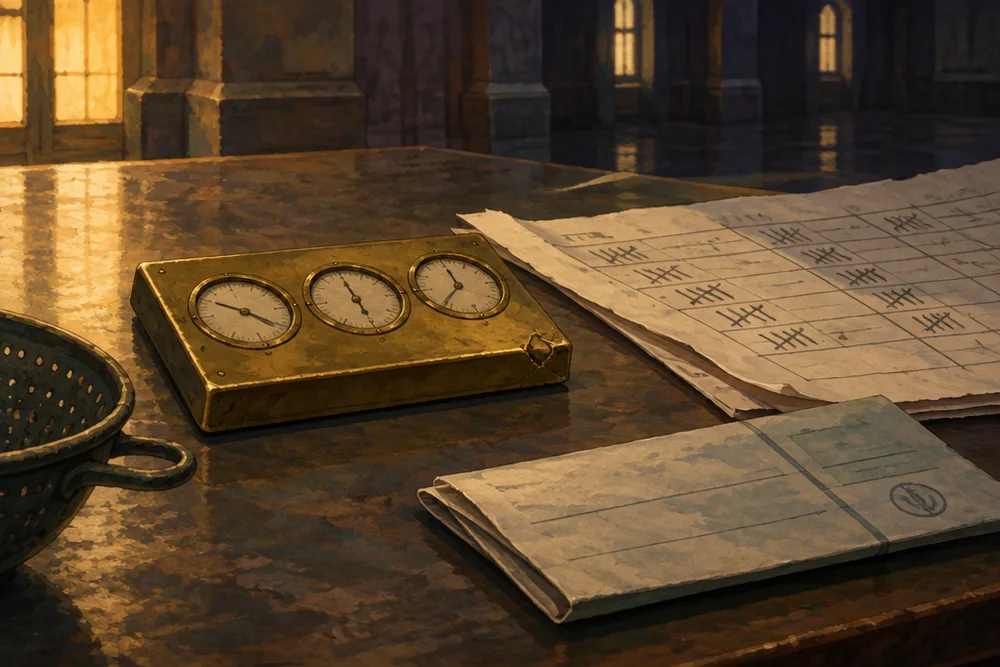
A clerk brought the latest load sheets from dispatch. Tern began sorting them by shift. Heth compared the laundry roster with the proposed windows, marking the handoffs that would require paid coverage. They worked under the same lamps that the next vote might decide how to power.
Fara took no part in filling the columns. She had learned what happened when someone treated another person’s access as a repair detail. Instead, she checked the meter’s readings and made sure its separate stops remained legible. The dials did not settle the argument, but they kept the record from being blurred into one convenient number.
The first bell sounded in the city terraces. In the hall, nobody moved away from the table. A clerk announced that the emergency vote would be called before the suspension expired, once the cost proposal was complete.
Iven pulled off her gloves and laid them beside the ledger. “We inspect first,” she said. “Then we vote.”
The second bell came while the remote tenants were still on the line. Their voices overlapped as the operator tested the connection, then resolved into separate questions. One tenant asked whether paid waiting would include the time spent returning from a failed transfer. Another asked how a household would prove that childcare had been necessary.