The Hours We Kept Quiet
Page 196 of 298
Chapters
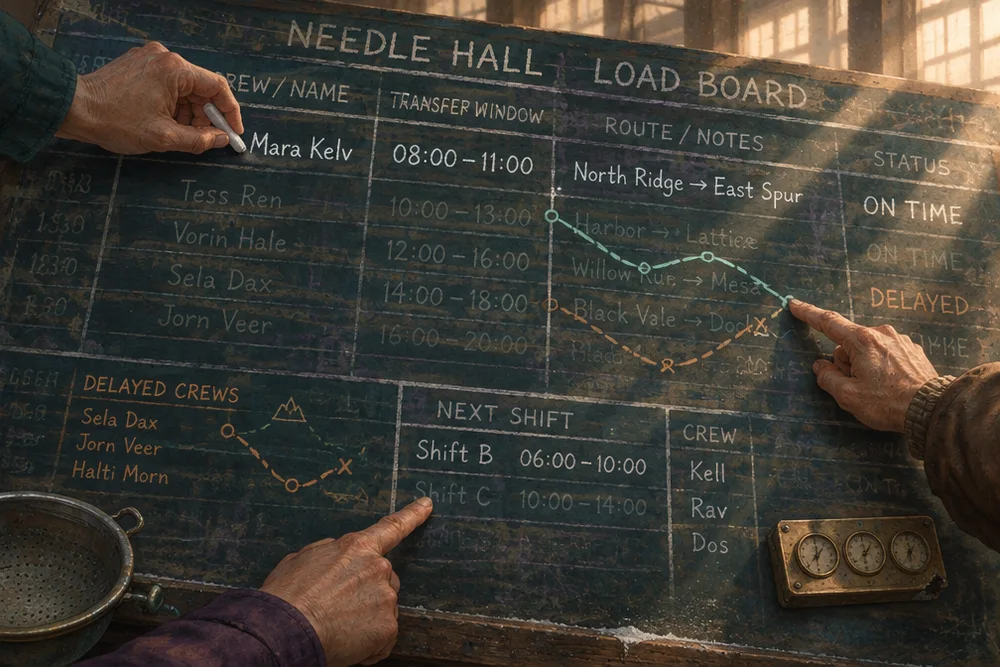
“If you put us on separate schedules,” Heth said, “we’ll spend the whole day missing each other.”
“If you put the freight crew on hold, we lose paid hours,” Tern said. “The cargo doesn’t wait for the vote to end.”
Fara studied the board. “Could the transfer be booked before the shift change, with a paid hold if the lift runs late?”
“Paid by whom?” Tern asked again.
“That’s the part we’re negotiating,” said Heth. “Not whether the hours count.” She pulled a chair close and began listing the workers needed to cover the handoff. Tern took the chalk from Iven and added the crew required at the freight end. The neat schedule became crowded with names and duties.
They agreed on protected transfer windows: fixed periods when the lift would serve the handoff between laundry and freight, with neither crew assigned another job during the transfer. If a delay pushed workers past the window, waiting time would be paid rather than hidden as a favor. They did not agree on the source of the money.
Iven let them leave the amount blank. “We can’t write a funded order without a funding line.”
“Then don’t pretend the order is funded,” Heth said. “But keep the terms.”
Fara watched the schedule take shape. It was not elegant. Some windows were narrow; others overlapped with the city’s busiest freight calls. A clerk would have to compare the actual dispatch slips with the plan every shift. Someone would have to answer when the numbers did not match.
“If you restore the reserve draw tonight,” Heth said to Iven, “the lamps come back on here. We know that. We also know what goes dark over there.”
“And if I don’t,” Iven replied, “someone else may be injured in a blackout we could have prevented.” Her voice had gone tight. “I signed the injury ledger. I read the names.”
Fara understood the weight of that answer. Iven wasn’t choosing between a good plan and a bad one. She was choosing between visible injuries with dates already written down and a district that could be erased by a decision the city called routine.
Tern folded his dispatch slip along the crease. “The crews will work the windows. We won’t agree to disappear the waiting.”
“Neither should you,” Iven said.
The statement did not settle the money. It did change the room. Workers who had stood apart now leaned over the same board, pointing out where one crew’s delay became another crew’s missed shift. The bargain had not been offered to them as a clean sacrifice. They were making its shape together.