The Hours We Kept Quiet
Page 19 of 298
Chapters
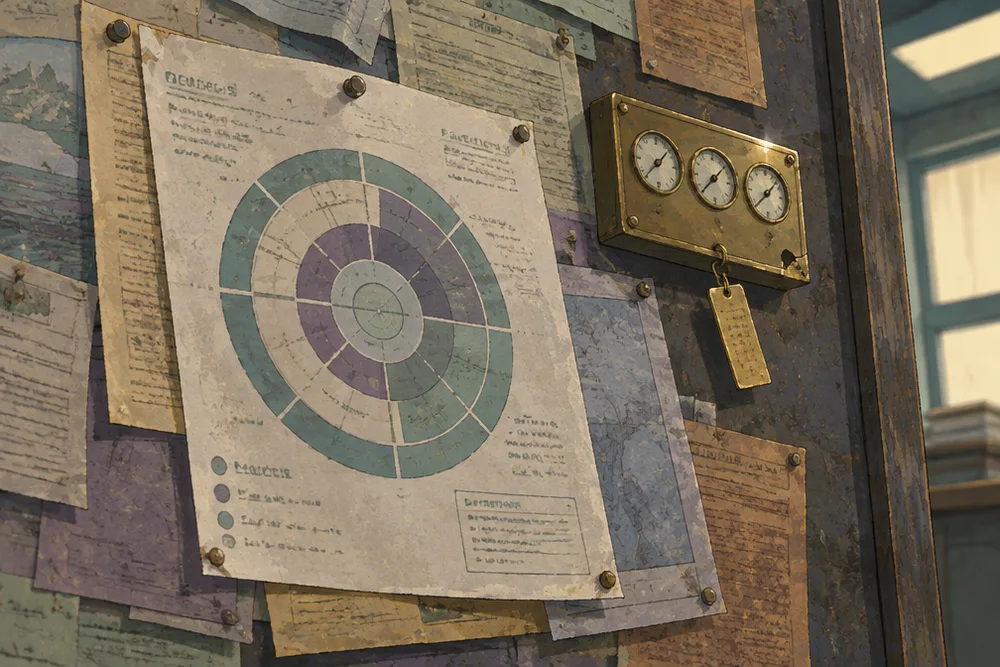
Fara stepped away from the counter. On the board, sheets had been layered over older sheets, their corners nailed down against the dry air. She found the number and read the summary. The test was scheduled for the next evening, after the lower lamps’ ordinary peak. It would divert a short interval of reserve current to the Vane Court bank. A boundary inspection would document the route’s service footprint. No residents, structures, or expected losses were mentioned.
The words gave her nothing to take back to Eska except that the city had made an entry for the test. The notice in the kitchen had said more than the public summary, but not enough to make a decision. Fara copied the schedule, the responsible office, and the objection deadline. She copied the number a third time, exact down to its hyphens.
At the foot of the sheet, a line specified that the test would proceed unless a substantiated safety objection was filed before the following dusk. The lower landing lamps were listed as a public benefit. The inspection was listed as routine. Fara’s thumb pressed into the page beside the word routine, leaving a faint gray mark.
She had no substantiation yet. She had a kitchen, an opening, and a girl who had asked if tomorrow was being taken back. She folded the copy carefully so the deadline remained visible.
She returned to the lift bay with the circular folded inside her jacket. Bram was gone from the landing, but his chair tracks curved away toward their rooms. Fara set the paper beside the meter and compared the printed number with the one Eska had shown her. They matched. The notice had not been a child’s invention or an old scrap coughed from a broken clock. It was part of the city’s system, delivered somewhere the city had not bothered to count.
At the bottom of the meter’s tag, Fara penciled the circular number. She stopped before adding a description. If she wrote “occupied structure,” the phrase would make the kitchen sound like an object. If she wrote “district,” she would be naming a scale she could not prove. She wrote “notice received beyond east threshold,” then dated it Day 2.
The phrase felt inadequate. She left it anyway.
Jory came in as the lamps brightened for evening. His plum cardigan was buttoned to the throat, blue wool wrap folded inward at his collar. He moved through the doorway with his long neck tucked, as though he had entered in the middle of a conversation and did not want to interrupt.
“You’ve got a council sheet,” he said.
“A circular.”
“Difference?”